
5 July 2026
TFCC Wrist Tears: How Physiotherapy Supports Your Recovery
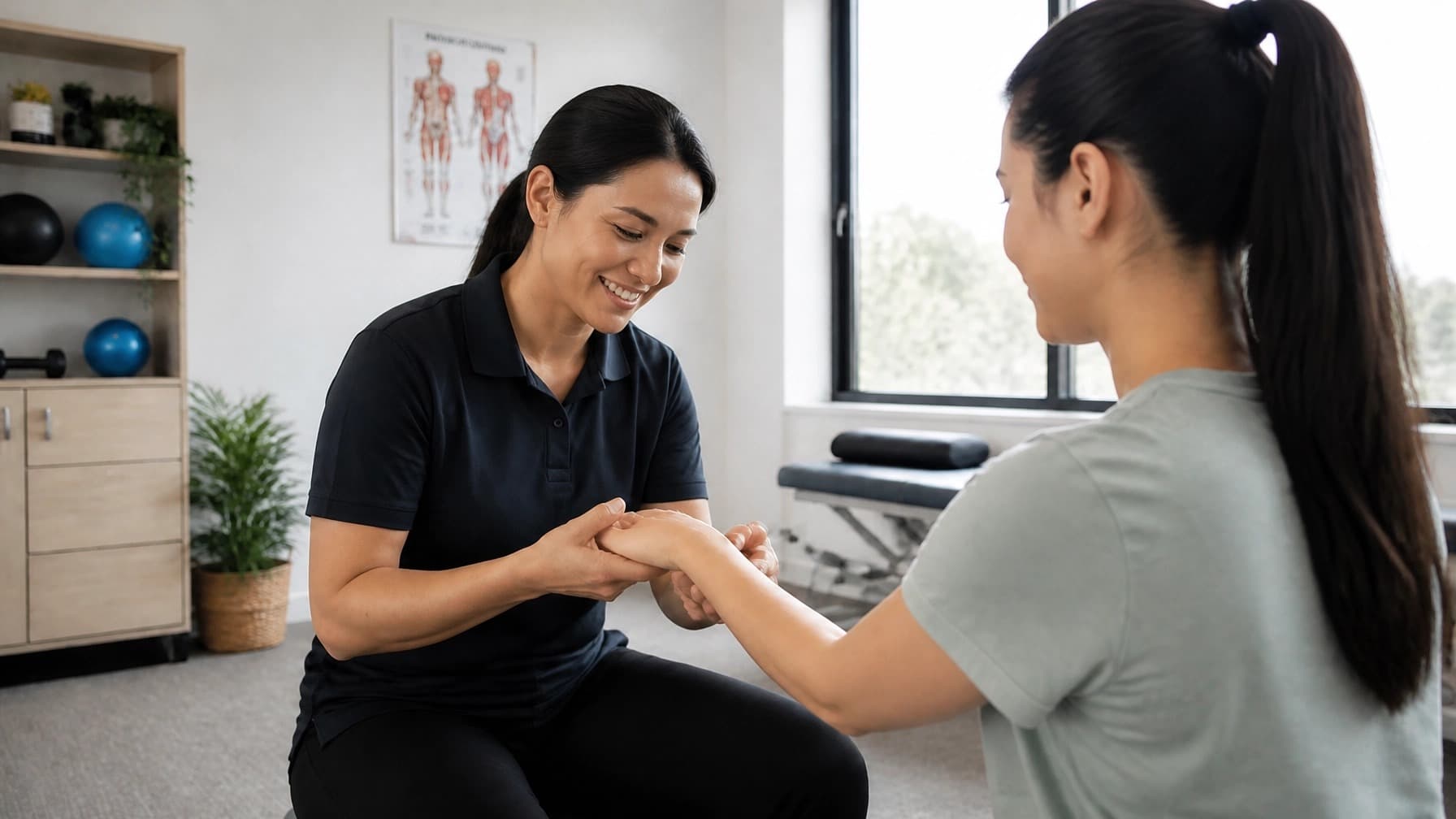
If you've ever felt a sharp, nagging pain on the pinky side of your wrist, maybe while opening a heavy door, pouring a kettle, or doing a push-up, you might have heard the term "TFCC tear" thrown around.
It sounds scary, right? Like something that definitely needs a surgeon and a few months in a heavy cast. But here's the reassuring news: at Komplete Physiotherapy, we see these injuries often, and for many people, recovery is possible without surgery. Whether surgery is right for you is a decision for you and your doctor, and physiotherapy can support your recovery either way.
In this post, we're going to break down what a TFCC tear actually is, why your wrist is clicking, and how physiotherapy can support your recovery and help you get back to your normal activities.
What on earth is a TFCC?
First things first, let's clear up the jargon. TFCC stands for the Triangular Fibrocartilage Complex.
Think of it as the "meniscus of the wrist." Just like the cartilage in your knee, the TFCC is a small but mighty structure made of cartilage and ligaments. It sits on the ulnar side of your wrist (the side with your pinky finger) and acts as a shock absorber and a stabiliser. It's what allows your wrist to move smoothly in all directions while keeping the bones of your forearm, the radius and the ulna, together.
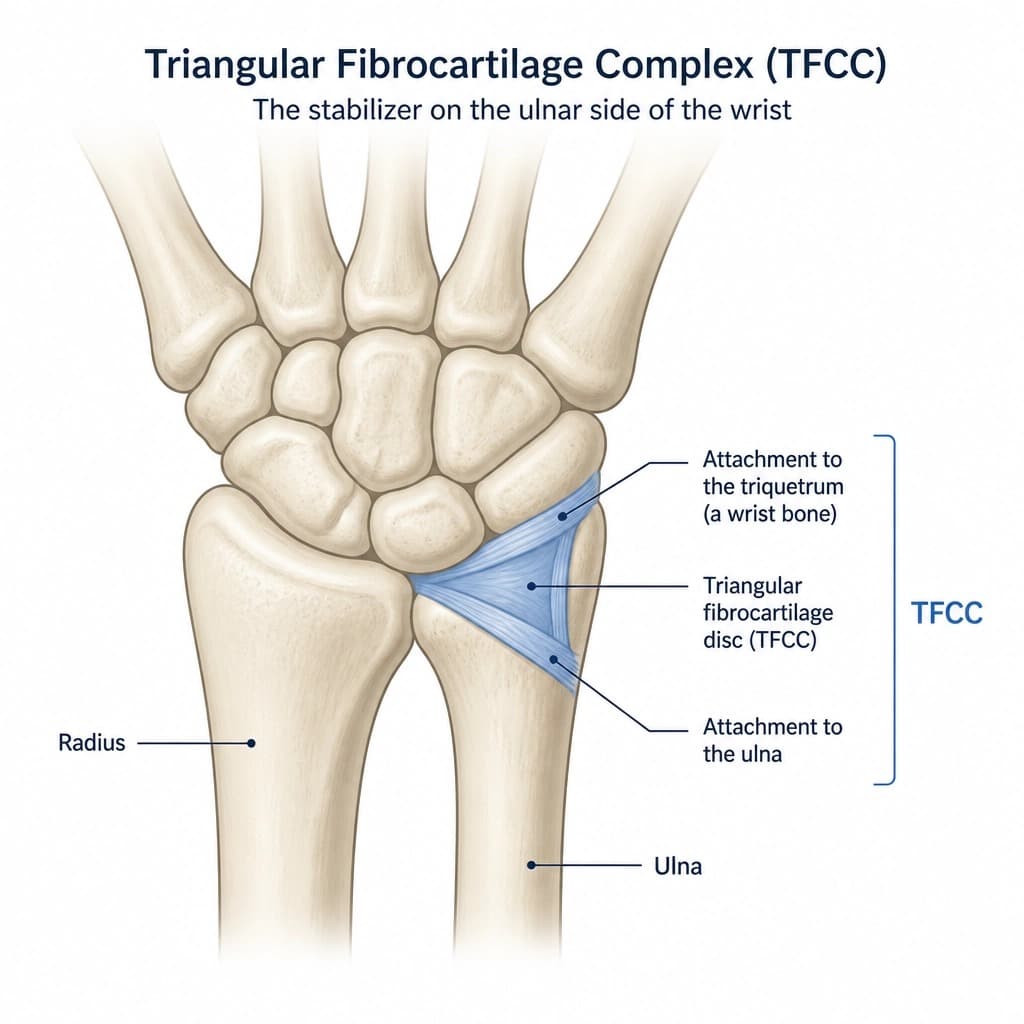
When this little piece of tissue gets torn, whether through a sudden fall on an outstretched hand or just "wear and tear" over time, everything can feel a bit unstable.
How do I know if I've torn it?
Common signs that your TFCC is asking for help include:
- Pain on the pinky side: usually worse when you grip things or twist your wrist.
- Clicking or popping: you might feel a "catch" when you move your hand.
- Weakness: finding it hard to hold a heavy frying pan or a bag of groceries.
- Tenderness: if you press right on the bony bump on the outside of your wrist, it really hurts!
These signs can point to a few different wrist problems, not only a TFCC tear. The only way to know what is actually going on is to have your wrist properly assessed, rather than self-diagnosing from an article.
A Common Question: Is Surgery Always Needed?
This is one of the most common questions we get asked. Whether surgery is needed depends on the type and severity of the tear, and it is ultimately a decision to make with your doctor. The reassuring part is that many minor to moderate tears are managed without an operation.
While some severe tears (especially those caused by major trauma) may need review by a surgeon, research suggests that many minor to moderate TFCC tears respond well to non-surgical care, sometimes called "conservative management." That's just a simpler way of describing physiotherapy, rest, and targeted exercises.
With a consistent, well-structured plan, many people are able to return to their daily activities over the following weeks, though recovery timeframes vary from person to person.
How Physiotherapy Can Help
- An early start: physiotherapy can begin supporting your recovery straight away, at a pace that suits you.
- Building strength: alongside settling your symptoms, we work to rebuild the strength and control in the muscles around your wrist.
- A focus on daily function: we tailor your plan to the activities, work, and hobbies you want to get back to.
How Physiotherapy Helps Your Wrist Recover
You might be wondering, "How can exercise help a tear in my cartilage?"
It's a great question. While exercise doesn't "sew" the tissue back together like a needle and thread, it does something valuable: it helps your wrist learn to handle load again and builds the surrounding support.
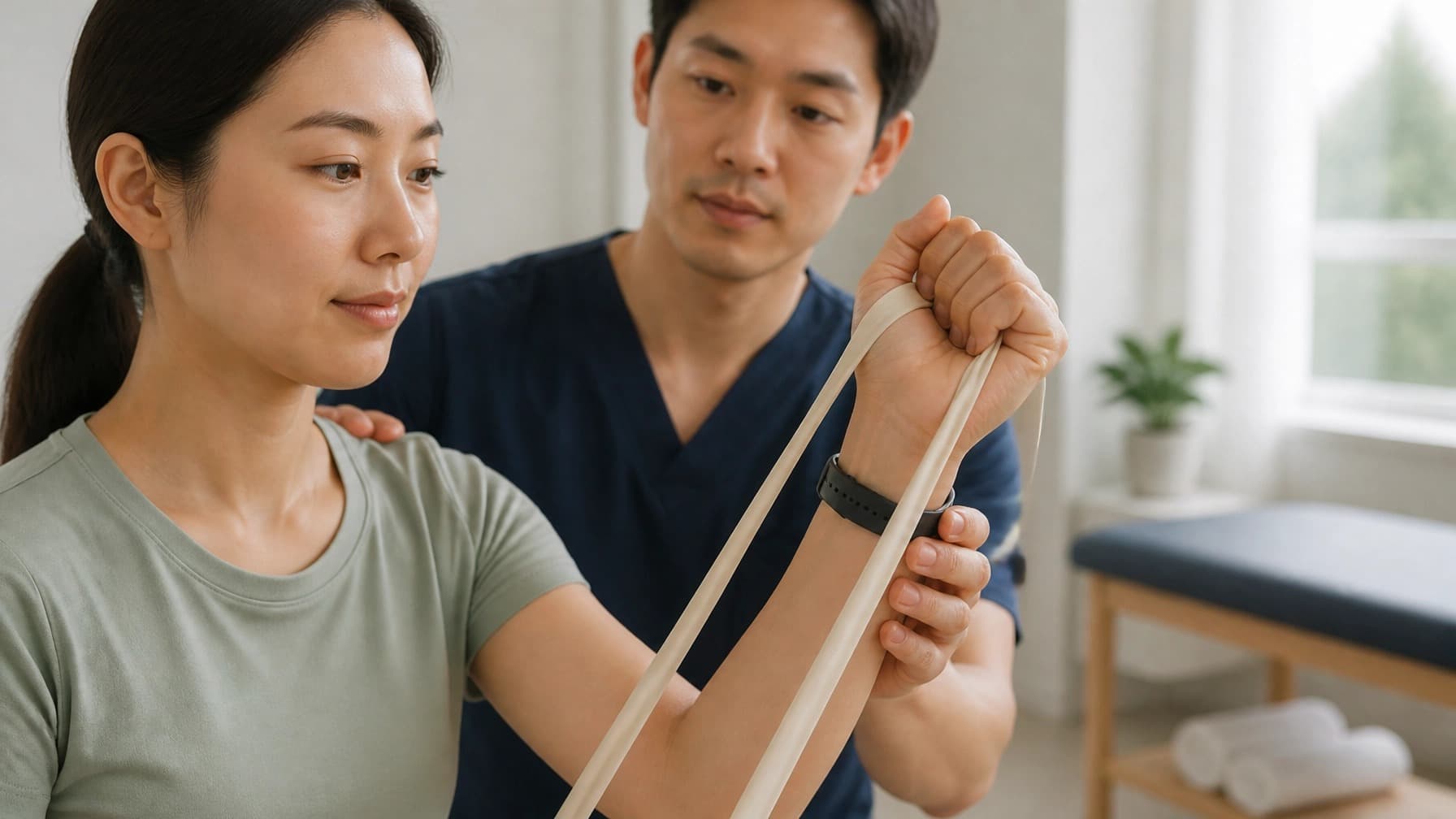
Here is how we tackle a TFCC tear at Komplete Physiotherapy:
Phase 1: Calm it down
The first goal is pain relief. We might suggest a specific wrist brace or "splint" to keep the area stable. This gives the TFCC a chance to settle down without being constantly tugged on. We'll also look at your daily habits, maybe how you hold your phone or use your mouse at work, to find ways to offload the pressure.
Phase 2: Get it moving (Gently!)
Once the sharp pain subsides, we start moving. We use gentle "range of motion" exercises to make sure your wrist doesn't get stiff. Stiffness is the enemy of recovery!
Phase 3: Proprioception, the "Secret Sauce"
This is a fancy word for your body's ability to know where it is in space. We use balance-style exercises for your wrist (yes, your wrist has balance too!) to help the ligaments "re-learn" how to keep your joint stable.
Phase 4: Load and Strength
Finally, we get you strong. We use resistance bands, light weights, and functional movements. If you're a workers compensation patient, we'll focus on the specific tasks you do at work. If you're an athlete, we'll get you back to your sport.
Why "Home Visits" are a Game Changer for Wrist Rehab
One of the biggest hurdles to recovery is actually getting to your appointments. If your wrist is hurting, driving can be a literal pain.
That's why we offer mobile physio. We can come to you in Schofields, Tallawong, The Ponds, and surrounding areas.

By seeing you in your own environment, we can:
- Check your desk setup to see if it's aggravating your wrist.
- Show you exactly how to do your exercises using the furniture and equipment you already have.
- Save you the stress of navigating traffic when you're already in pain.
Understanding Your Options
For many wrist injuries, non-surgical care is one of the first approaches considered, and your doctor can advise whether surgery is right for your situation. It is worth knowing that if you do have surgery, physiotherapy is usually an important part of your recovery afterwards too.
By starting with physiotherapy, you give your body the chance to recover and rebuild at its own pace. Being consistent with your rehabilitation can make a real difference to how your recovery progresses.
Ready to get your wrist back in action?
Don't ignore a persistent "click" or ache in your wrist. Whether you're dealing with a fresh injury or a nagging pain that just won't go away, we're here to help.
At Komplete Physiotherapy, we pride ourselves on simple, practical, and friendly care. We treat everyone from private patients to aged care residents, and we'd love to help you get back to doing what you love.
Not sure where to start? Our free phone consult is a no-pressure way to talk through your symptoms and work out the right next step, whether that is a session in-clinic or at your front door.