
5 July 2026
Workers Compensation Physiotherapy 101: A Beginner's Guide to Mastering Your Recovery
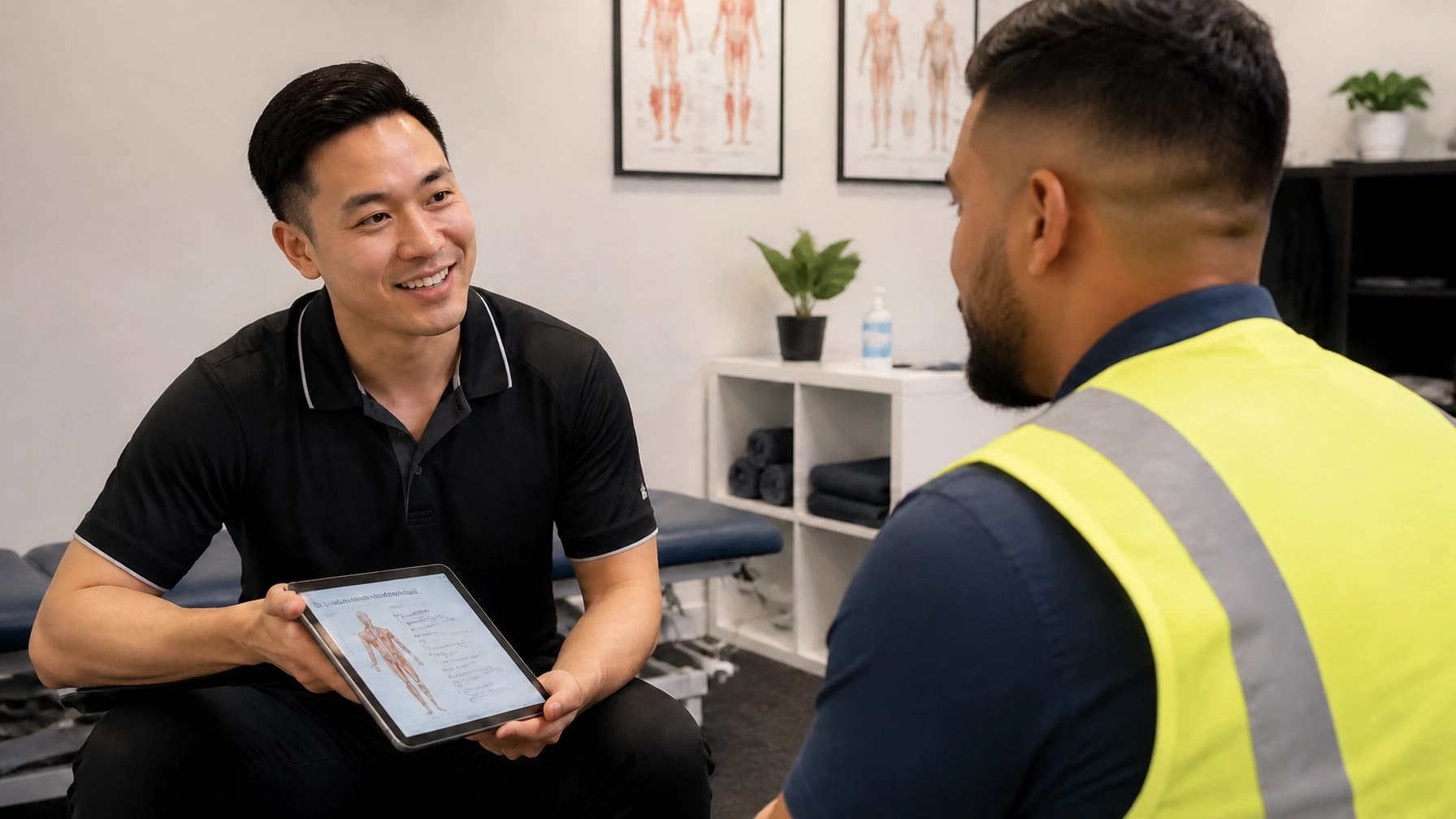
Getting injured at work is, quite frankly, a massive headache. Beyond the physical pain of the injury itself, there's a whole mountain of paperwork, insurance jargon, and "what happens next?" questions that can feel more exhausting than the actual job.
If you're sitting there with a sore back, a strained shoulder, or a repetitive strain injury wondering how on earth you're going to get back on your feet, you're in the right place. This is your no-nonsense, beginner-friendly guide to mastering your recovery after a workplace injury.
At Komplete Physiotherapy, we see people every day who are navigating this process for the first time. Whether you're searching for a local physio or you're stuck at home and need someone who can come to you, we're here to simplify the journey. Let's break it down step-by-step.
Step 1: The Initial Huddle (Reporting and the GP)
The very first thing you need to do when you get injured at work is tell someone. It sounds obvious, but you'd be surprised how many people try to "tough it out" for a week, only to find the paperwork gets much harder later on.
- Report the injury: tell your boss or supervisor immediately. They have to record it and notify their insurer.
- See a GP: this is a crucial step. You need to see a doctor (ideally one who is familiar with WorkCover or SIRA in NSW) to get a Certificate of Capacity.
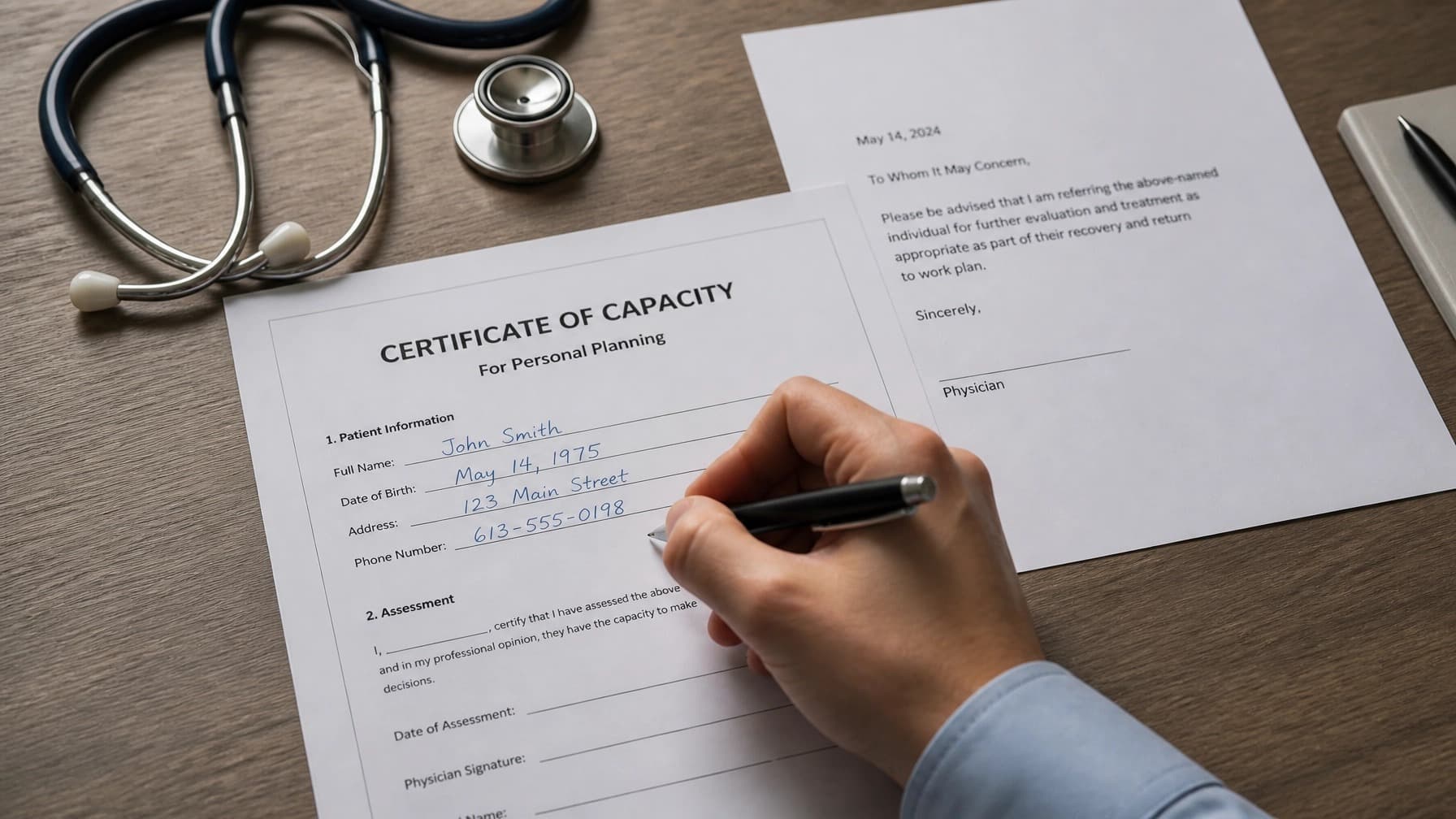
What is a Certificate of Capacity?
Think of this as your medical "passport" for the next few months. It tells the insurer, your employer, and your physio exactly what you can and can't do. It will list your diagnosis, how much you can lift, if you can drive, and, most importantly, what treatments you need. If your GP thinks physiotherapy will help, they will list "physiotherapy" as a recommended treatment.
Step 2: The Golden Ticket (Your Claim Number)
Once you've seen the doctor and your employer has lodged the claim, the insurance company will give you a claim number.
This number is your golden ticket. It means the insurer has acknowledged the injury, and you can start getting the treatment you need without paying out of pocket. In many cases in NSW, insurers will automatically approve an initial block of sessions (often up to 8) just to get the ball rolling quickly. This "early intervention" matters because starting rehabilitation sooner rather than later is widely encouraged in injury management, and many people find it supports their return to everyday activities.
Step 3: Choosing Your Team (You Have the Power!)
Here is a little secret that many employers don't mention: you have the right to choose your own physiotherapist.
While your workplace might suggest a specific clinic they've used before, you are not obligated to go there. You should choose a clinic that makes you feel comfortable, is easy to get to, or, even better, can come to you.
When you're looking for physiotherapy after a work injury, you want someone who understands the system. At Komplete Physiotherapy, we handle the direct billing to the insurer so you don't have to worry about the money side of things. We focus on the healing; you focus on the moving.
Step 4: Clinic or Couch? (Mobile vs. In-Clinic)
One of the biggest hurdles to recovery is actually getting to the appointments. If you've injured your leg and can't drive, or your back is so sore that sitting in a car feels like torture, even a local clinic might feel too far away.
This is where mobile physio (also known as home visit physiotherapy) can make a real difference.
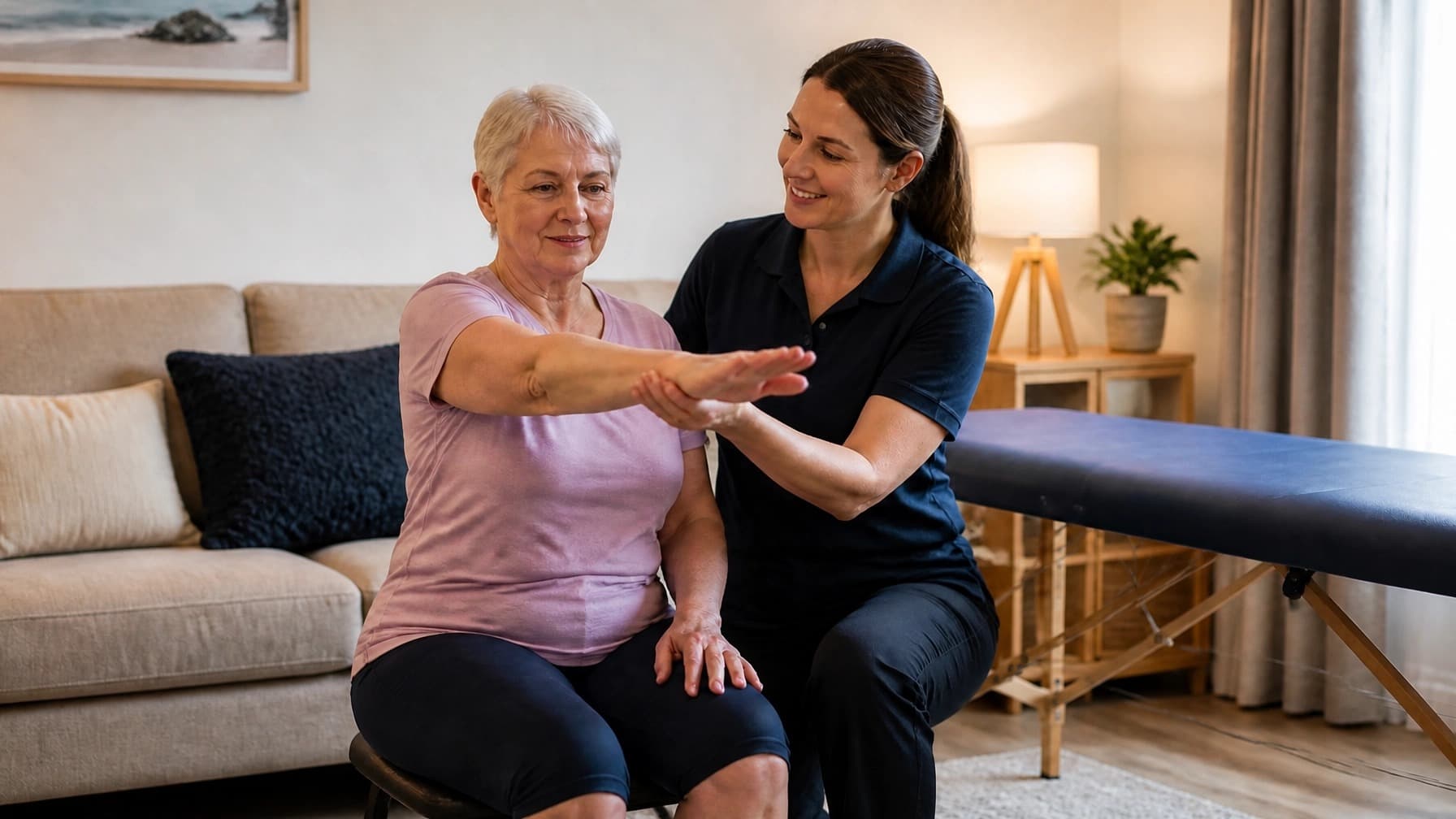
Why choose mobile physio?
- Convenience: we come to your home or even your workplace.
- Real-world environment: we can see exactly how you're sitting on your couch or moving in your kitchen and give you tips that work in your real life, not just a clinical setting.
- No stress: no traffic, no parking, no waiting rooms.
Of course, if you prefer the clinic environment, you're welcome to see us in person at the clinic instead. It's all about what fits your lifestyle and your injury best.
Step 5: The First Appointment (What to Expect)
Walking into your first session (or welcoming us into your home) shouldn't be intimidating. Here's what usually happens:
- The Chat: we'll talk about how the injury happened, what your job involves, and what your goals are. Do you want to be able to lift 20kg again? Or do you just want to be able to sit at your desk for an hour without pain?
- The Assessment: we'll check your movement, strength, and where it hurts.
- The Plan: we'll create a custom "Return to Work" plan. This isn't just about doing some stretches; it's a structured plan that works towards your return to your usual duties.
Step 6: The Recovery Journey
Recovery isn't a straight line. Some days you'll feel great, and some days you'll feel a bit stiff. The aim of your rehabilitation is to help rebuild your strength and support your return to the activities that matter to you.
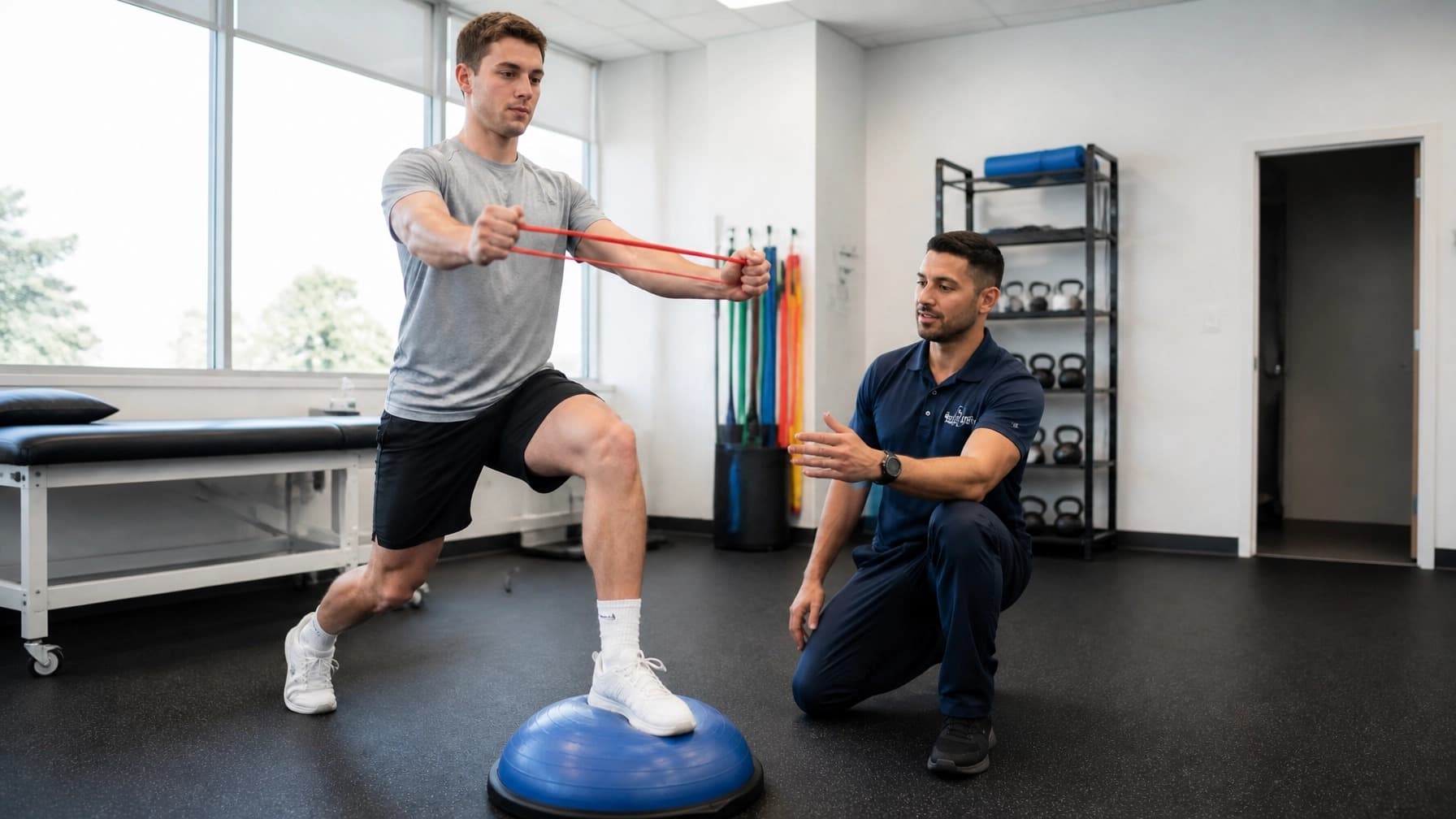
We use a mix of:
- Hands-on treatment: to reduce pain and improve joint movement.
- Exercise therapy: targeted movements to strengthen the muscles around your injury.
- Education: teaching you how to move safely at work to help lower the chance of it happening again.
As you progress, your physio will fill out a form called an AHRR (Allied Health Recovery Request) to show the insurer how much you're improving and request more sessions if needed. We handle all of that paperwork for you!
Why Choose Komplete Physiotherapy?
We know the workers compensation system can be a bit of a maze. Our goal is to be the guides who help you find the exit. Whether you're a private patient, a workers compensation patient, or an aged care funded patient, we treat every single person with the same casual, friendly, and attentive care.
We offer:
- Flexible options: choose between our clinic or home visit physiotherapy.
- Claims know-how: we understand what insurers need to help keep your claim running smoothly.
- Personalised care: no "one-size-fits-all" exercises here. Your plan is yours.
Ready to get started?
If you've got your claim number and you're ready to start feeling better, we're ready to help. Don't let a work injury sideline you for longer than it has to.
Give us a call or get in touch today to start your recovery journey with Komplete Physiotherapy.