
5 August 2026
Knee Bumps in Growing Teens: Understanding Osgood-Schlatter Disease
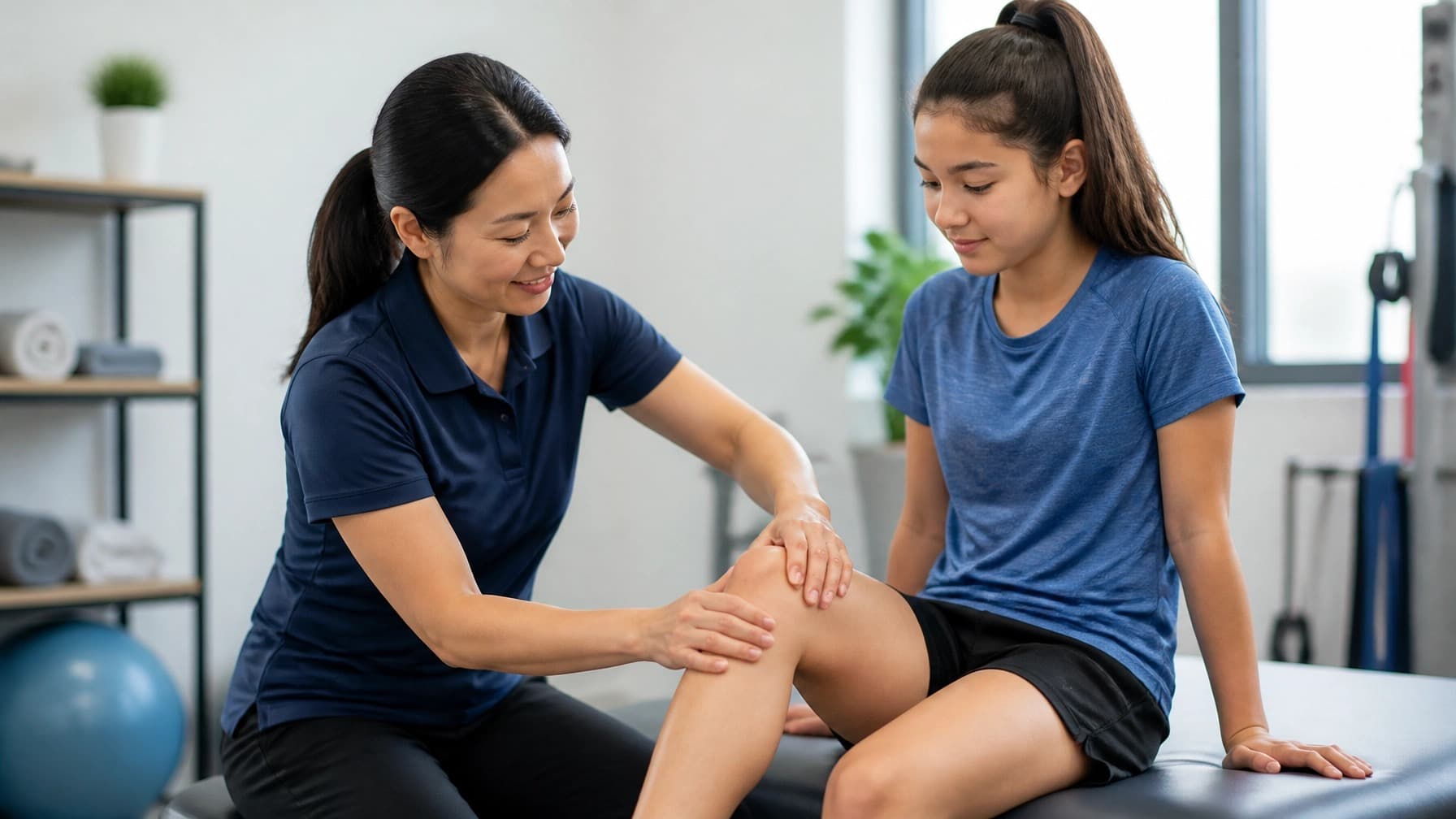
If you have a sporty teenager at home, you might have heard a few complaints lately about sore knees after soccer practice, basketball games, or track meets. But sometimes, it's not just general fatigue or normal growing pains: it's a distinct, tender bump right below the kneecap.
If your teen is pointing to a hard, painful little lump on their shin bone, they might be dealing with Osgood-Schlatter disease.
Don't let the word "disease" scare you: it's actually a very common, non-serious overuse condition that happens during childhood and adolescent growth spurts. At Komplete Physiotherapy, we see this all the time in active kids. The good news is that with the right guidance, it doesn't mean your teenager has to hang up their sneakers for good.
Let's break down what's actually happening, why it occurs, and how a few simple strategies (and some help from a physio) can keep them moving comfortably.
What Exactly Is That Knee Bump?
The hallmark sign of Osgood-Schlatter disease is a painful, tender bony prominence right at the top of the shinbone (medically known as the tibial tubercle).
If you gently press on that area, your teenager will likely wince. The bump might even look a bit swollen or prominent compared to the other knee. It usually flares up during or right after physical activity: especially sports that involve lots of running, jumping, sprinting, or quick changes of direction like basketball, football, netball, and gymnastics.
While it can feel alarming for both parents and teens, it is a very well-understood adolescent knee issue.
Why Does It Happen? (Growing Pains Simplified)
To understand Osgood-Schlatter, it helps to picture how teenagers grow.
During a growth spurt, bones often grow in length much faster than the muscles and tendons surrounding them. The quadriceps (the big muscles on the front of your thighs) connect to your kneecap, which then connects via the patellar tendon right onto that growth plate at the top of the shinbone.
When bones lengthen rapidly, your teen's muscles and tendons become relatively tight. Now, imagine your teenager sprinting down a soccer field or leaping for a basketball rebound. Every time they straighten their knee against resistance, that tight patellar tendon pulls hard on the immature, sensitive growth plate on the shinbone.
Over time, this repetitive traction causes mild irritation, inflammation, and micro-trauma. The body responds by laying down extra bone tissue, which creates that characteristic hard bump below the kneecap.
The Silver Lining: It's Self-Limiting
One of the most reassuring things we tell parents at our clinic is that Osgood-Schlatter disease is self-limiting.
What does that mean? It means that once your teenager finishes growing and their growth plates finally close (usually around 14 to 18 years of age), the condition naturally resolves. The irritation stops, and while that little bony bump might stay slightly prominent as a badge of honour from their teenage sports days, the pain goes away.
However, waiting years for a growth spurt to finish while dealing with persistent knee pain isn't much fun. That's where physiotherapy comes in. You don't have to just "wait it out" in agony; a tailored physio plan can help make the journey more comfortable.
Practical Tips: Managing Osgood-Schlatter Day to Day
Managing this condition is all about striking a balance between keeping kids active and protecting the sensitive knee. Here are some practical steps you can take at home and on the field:
1. Smart Activity Modification (Not Complete Rest)
In the past, parents were often told to make their kids stop playing sports entirely until the pain vanished. Today, we know better! Complete couch rest is rarely necessary. Instead, we practice load management.
- Reduce high-impact training volume temporarily.
- Take extra rest days between intense games.
- Swap high-impact days with lower-impact cross-training like swimming or cycling if it feels comfortable.
2. Gentle Stretching
Because tight quads and hamstrings pull harder on the knee, introducing a gentle, consistent daily stretching routine can work wonders. Focus on:
- Quadriceps stretches (front of the thigh)
- Hamstring stretches (back of the thigh)
- Calf stretches
Tip: Stretches should feel like a mild, comfortable pull: never sharp or painful.
3. Targeted Strengthening
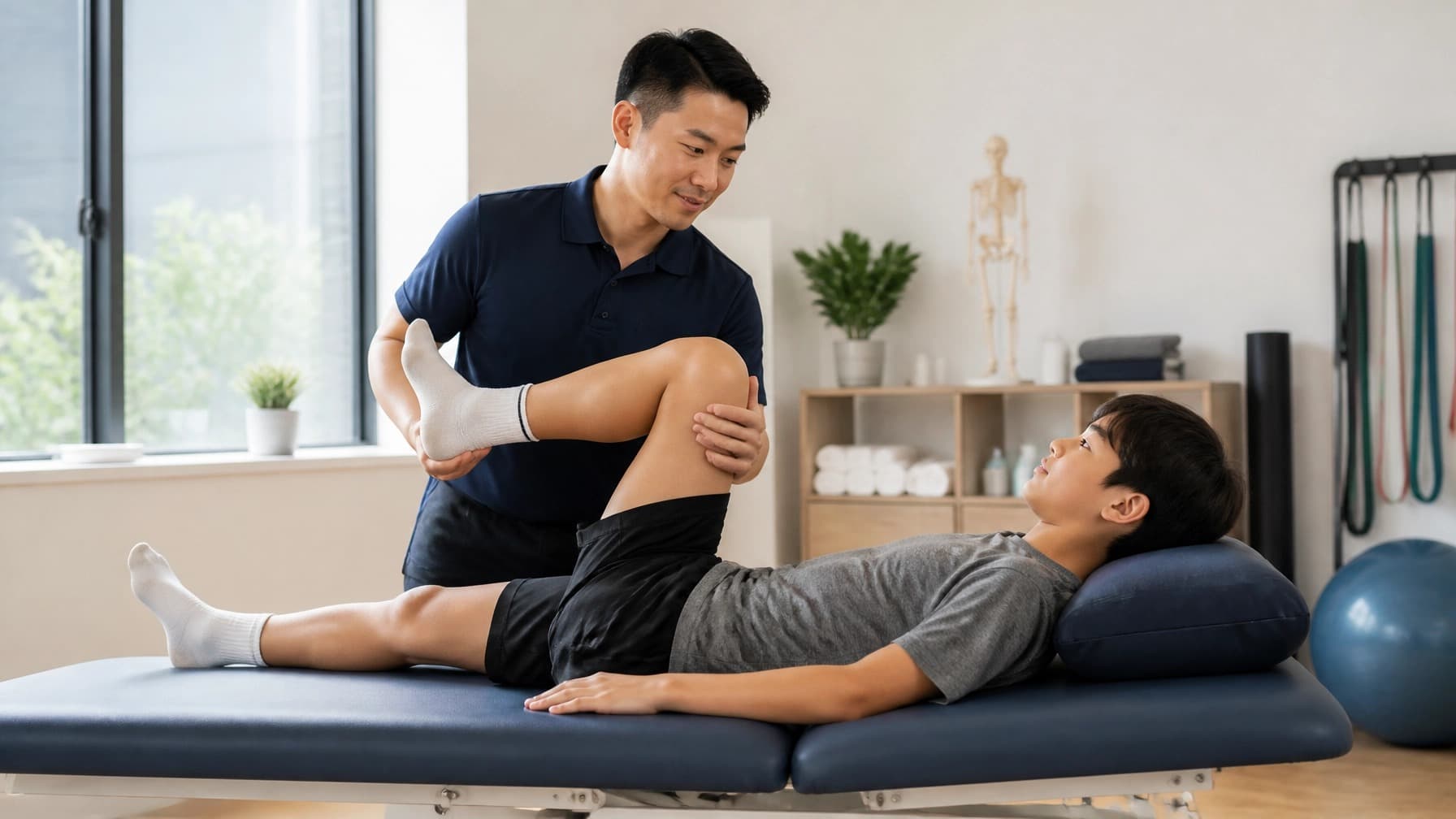
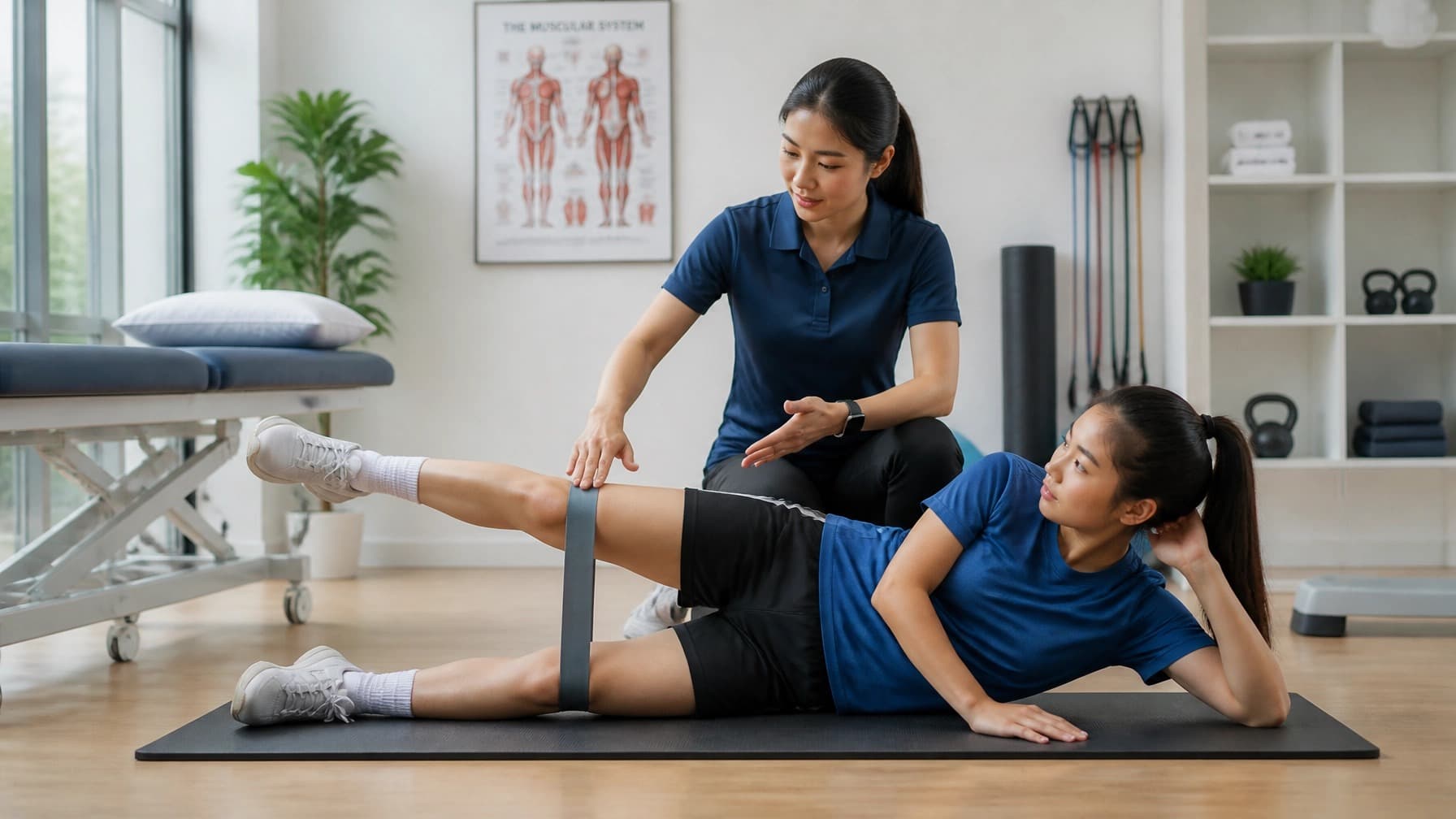
Building resilience around the joint helps the leg handle sports loads better. A physiotherapist can guide your teen through safe, pain-free strengthening exercises for the quadriceps, hips, and core to improve overall lower-limb alignment.
4. Ice and Pain Relief
Applying an ice pack wrapped in a towel to the tender bump for 15 to 20 minutes after training can help calm acute soreness and swelling. Always check with your family doctor or pharmacist regarding safe, short-term use of anti-inflammatory medications if pain flares up after a big match.
When to Seek Professional Physiotherapy Support
Every teenager's body and activity load is unique. If your teen is starting to limp after games, waking up with discomfort, or missing out on the sports they love because of knee pain, it's a great time to book an initial consultation.
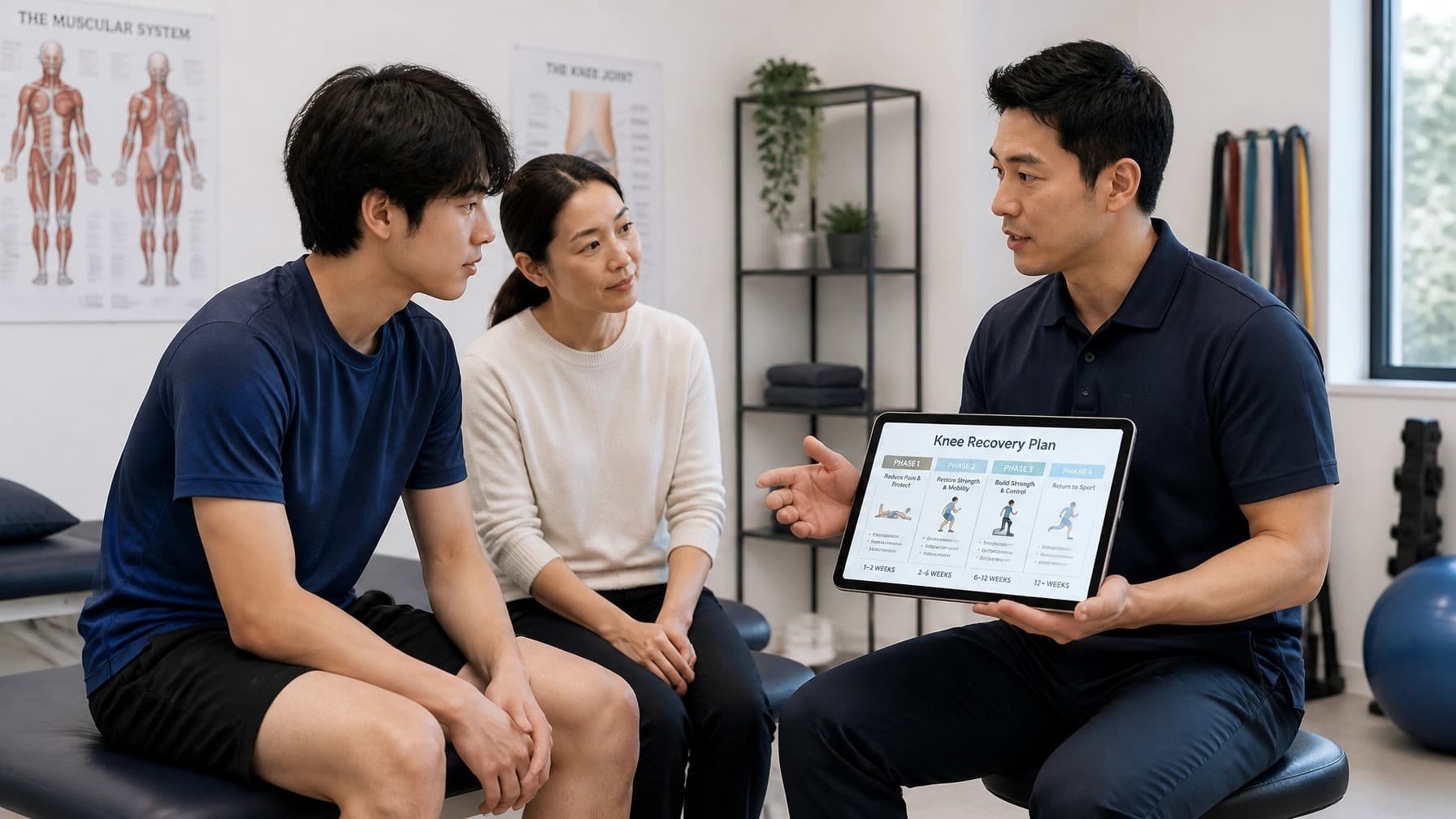
At Komplete Physiotherapy, we can assess your teenager's biomechanics, rule out other knee issues, and put together a customised management plan. Whether they need hands-on soft tissue therapy, a structured home exercise program, or advice on taping and bracing, we are here to support their active lifestyle every step of the way.
You can explore our services or get in touch to chat about how we can help your young athlete stay strong, active, and smiling.
Final Thoughts
Growing up and playing sports should be an exciting time, not a painful one. While a knee bump from Osgood-Schlatter disease can put a temporary speed bump in your teenager's athletic journey, it is completely manageable. By understanding what's going on beneath the surface and partnering with a healthcare professional, your teen can keep doing what they love while their body grows strong.
Got questions about your teen's knee pain? Reach out to us today and let's get them back on track!