
13 July 2026
Is it a Strain or Tendinitis? How to Tell the Difference

We've all been there. You're halfway through a morning run, or maybe you're just reaching for a heavy box in the garage, and suddenly, ouch. Something doesn't feel right.
At Komplete Physiotherapy, one of the most common questions we get is: "Did I pull a muscle, or is this something else?"
Because "pain" is a pretty broad term, it's easy to group everything into the same category. But when it comes to your body, where it hurts and how it hurts tells a very specific story. Usually, the culprit is one of two things: a muscle strain or tendinitis (also known as tendinopathy).
While they might feel similar at first, the way we treat them is actually quite different. Identifying the source of the problem is the first step toward getting you moving well again. Let's break down the differences so you can stop guessing and get the right support.
The Engine vs. The Cables: Understanding the Terminology
To understand the difference between these two injuries, it helps to think of your body like a high-performance car.
The Muscle (The Engine)
Your muscles are the "engines" of your body. They are the meaty parts that contract and relax to create power and movement. When we talk about a muscle strain, we are talking about an injury to these power-generating fibres. It could be a tiny overstretch or a more significant tear in the "belly" of the muscle.
The Tendon (The Cables)
If the muscle is the engine, the tendon is the "cable" that connects that engine to the chassis (your bones). Tendons are incredibly tough, fibrous tissues designed to transmit the force from your muscles to move your joints. When these cables become irritated, inflamed, or start to wear down from overuse, we call it tendinitis or tendinopathy.

Onset: The "Oops" Moment vs. The "Slow Build"
One of the first things we look at is how the pain started.
Muscle Strains: The Sudden Snap
Muscle strains are usually acute. They happen in a split second, an "oops" moment. You're sprinting for the bus, you lift a heavy grocery bag with a twist, or you trip on the stairs. You can usually point to the exact second it happened. It's a sudden, sharp protest from the muscle fibres that have been pushed past their limit.
Tendinitis: The Grumbling Neighbour
Tendons, on the other hand, are rarely "sudden" (unless they rupture, which is a different story!). Tendinitis is more like a grumbling neighbour that gets louder and louder over time. It usually builds up over weeks or months of repetitive stress. Maybe you've increased your walking distance recently, or you've been spending more time typing at a desk that isn't ergonomically set up. The tendon slowly becomes "grumpy" until the pain becomes impossible to ignore.
How It Feels: Cramps vs. Morning Stiffness
The "flavour" of the pain can also give us a big clue.
Muscle Pain (The Strain)
- The Sensation: feels like a sharp sting, a cramp, or a deep tear.
- The Look: you might see some bruising or swelling around the area a day or two later.
- The Movement: it usually hurts whenever you try to use that specific muscle or stretch it out.
Tendon Pain (The Tendinitis)
- The Sensation: often feels like a dull, nagging ache or a "burning" sensation.
- The Morning Test: this is a classic tendon sign! Tendons hate rest. If you wake up and your heel (Achilles) or elbow feels incredibly stiff and sore for the first few minutes of the day, but then "warms up" and feels better as you move around, you're likely looking at a tendon issue.
- The Sharp Sting: while it often aches, it can also produce a very sharp, localised sting if you suddenly load it (like jumping or gripping something tightly).
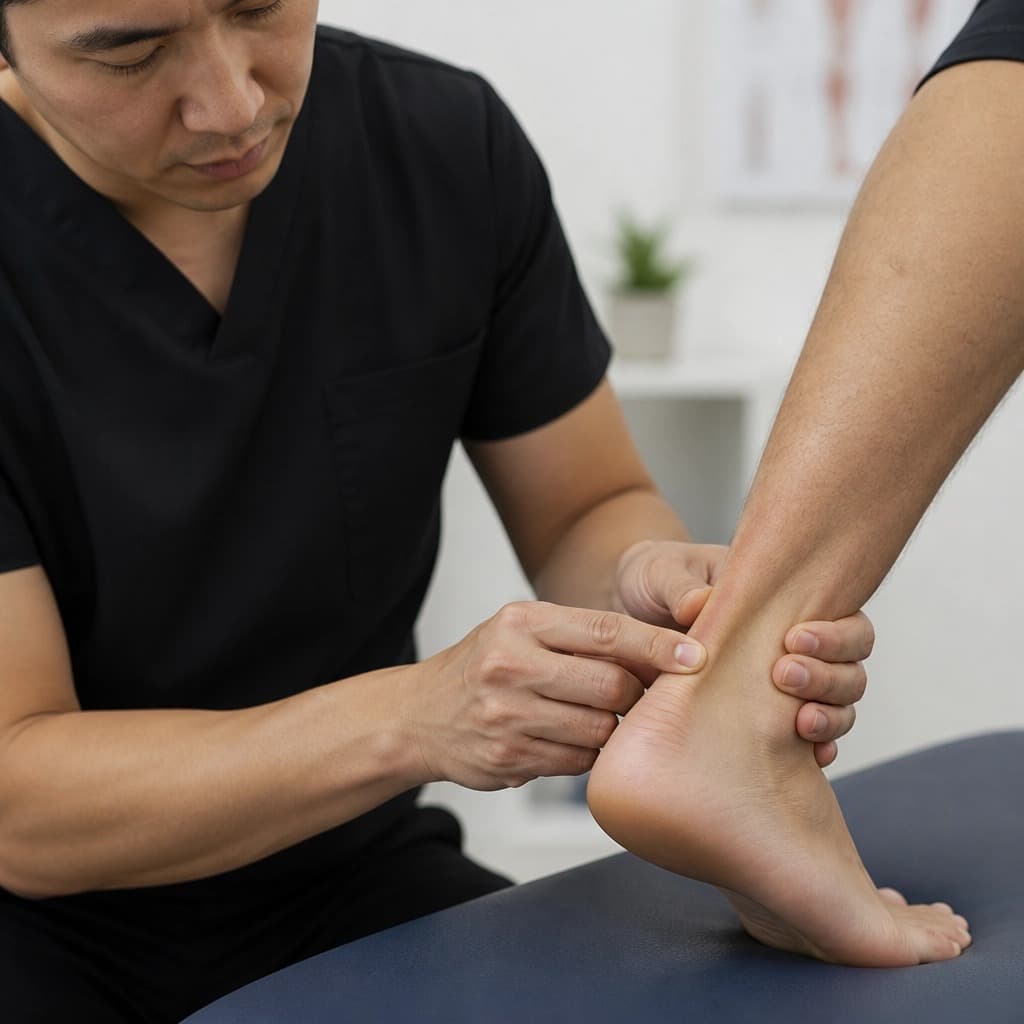
Why Recovery Times Differ (The Blood Factor)
This is the part that often frustrates patients. You might have a friend who "pulled a hammy" and was back playing soccer in three weeks, while your elbow pain has been sticking around for three months. Why the difference?
It all comes down to blood supply.
Muscles are very "vascular," meaning they have a rich supply of blood constantly flowing through them. Blood carries the nutrients and oxygen needed for repair. Because of this, muscles are actually pretty good at healing themselves relatively quickly.
Tendons, however, have a much poorer blood supply. They are dense and white, not red and fleshy. Because they don't get as much "fuel" delivered via the bloodstream, they are much more stubborn. They don't just need rest; they need a very specific, gradual loading plan to stimulate them to get stronger again.
Recovery: Rest vs. Resistance
Because the tissues are different, the "homework" we give you at Komplete Physiotherapy will be different too.
For a muscle strain, the early stages are often about protection. We want to avoid further tearing, manage the swelling, and then slowly reintroduce stretching and light movement.
For tendinitis, complete rest is actually one of the worst things you can do. If you just stop moving, the tendon gets "lazy" and weaker. The moment you try to go back to your normal activity, the pain returns because the tendon still can't handle the load. Instead, we use "progressive loading." We give you specific, slow exercises that put just enough stress on the tendon to tell it: "Hey, you need to get tougher!"
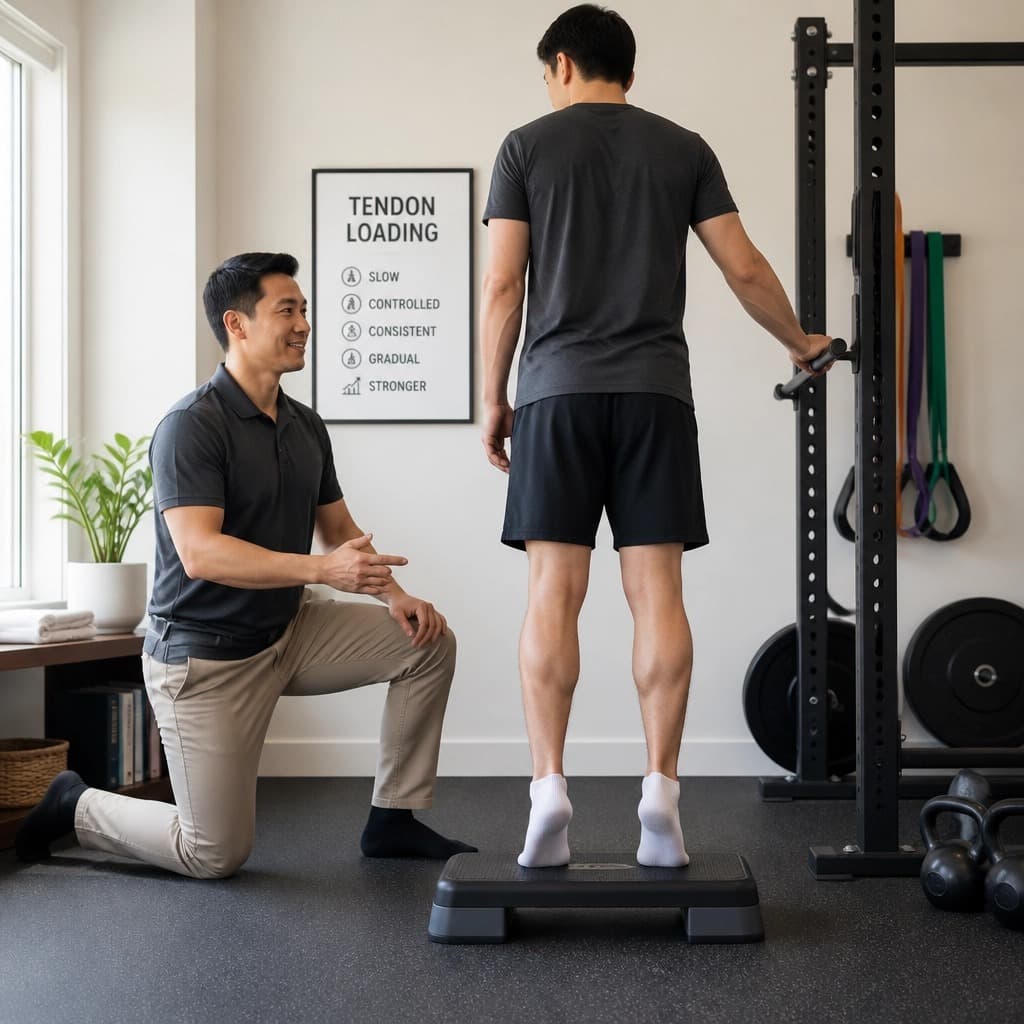
How Our Mobile Service Makes a Difference
At Komplete Physiotherapy, we know that life doesn't happen in a clinic, it happens at home and at work. This is why our mobile physiotherapy service is so valuable, especially for tendon and muscle issues.
When we visit you in your own environment, we can act like "body detectives."
- For Tendon Pain: we can look at how you're sitting at your home office desk or how you're lifting your toddler. Often, there's a repetitive movement in your daily routine that is "feeding" the tendinitis. By seeing it in person, we can tweak your environment or your technique to help settle the cycle of irritation.
- For Muscle Strains: we can check the stairs you need to climb or the chair you sit in to ensure you aren't accidentally re-straining the muscle during your recovery.
Whether you are a private patient, a worker's compensation patient, or an aged care funded patient, having a therapist see your real-world setup can make a real difference to your recovery.

The Bottom Line
Is it a strain or tendinitis? Both can be a literal pain in the neck (or leg, or arm!), but knowing which one you're dealing with changes everything.
- If it was sudden and feels crampy, it's likely a strain.
- If it's been building up and feels stiff in the morning, it's likely tendinitis.
These are general signs, not a diagnosis. A strain and a tendon problem can feel very similar, and some injuries involve both, so the only way to know for certain is to have it properly assessed.
The good news? Both are conditions physiotherapy can help with. If you've been "pushing through" the pain or waiting for it to go away on its own, it might be time for a professional set of eyes to take a look.
At Komplete Physiotherapy, we're here to help you move better and live better, whether that's in our clinic or right in your living room. Don't let a "grumpy" tendon or a "pulled" muscle keep you on the sidelines!