
13 July 2026
Thoracic Outlet Syndrome: How Physiotherapy Supports Your Recovery

Have you ever woken up with an arm that feels like a lead weight? Or maybe you've spent your afternoon at your desk only to find a strange "pins and needles" sensation creeping down to your ring and pinky fingers?
If you've been Googling those symptoms, you might have come across a scary-sounding term: Thoracic Outlet Syndrome (TOS).
When people hear "syndrome," their minds often jump straight to surgery. Here's the reassuring news: at Komplete Physiotherapy, we see these symptoms often, and for many people, physiotherapy is a helpful first step. Whether surgery is ever the right path is a decision for you and your doctor, and physiotherapy can support your recovery either way.
In this post, we're going to break down what TOS actually is, why your arm feels so heavy, and how physiotherapy (including our mobile physio service) can support your recovery.
What on Earth is Thoracic Outlet Syndrome?
Think of the area between your lower neck and your upper chest as a busy highway interchange. This space is called the thoracic outlet.
Passing through this narrow gap are some very important "passengers":
- Nerves (the brachial plexus) that control your arm and hand.
- Blood vessels (arteries and veins) that supply blood to your limb.
Thoracic Outlet Syndrome happens when this highway gets a bit too crowded. Whether it's due to tight muscles, a slumped posture, or even the way your ribs are shaped, these nerves or vessels get squeezed.
When they get squeezed, they start complaining, and that's where your symptoms come from.
Does This Sound Like You? (Common Symptoms)
TOS can be a bit of a chameleon because it feels different for everyone. However, most people with TOS report a few common "red flags":
- The "Dead Arm" Feeling: your arm feels heavy, weak, or easily fatigued, especially when you reach overhead (like reaching for a high shelf or hanging out the washing).
- Pins and Needles: numbness or tingling that usually travels down the inside of your arm and into your ring and little fingers.
- Temperature Changes: your hand might feel colder than the other one, or even look a little pale or bluish.
- Neck and Shoulder Aches: a dull, nagging ache in the side of your neck or the front of your shoulder that just won't go away.
These signs can point to a number of different problems, not only TOS, so the only way to know what is going on is to have it properly assessed rather than self-diagnosing from an article. This matters especially if your hand looks pale or bluish, feels cold, or the symptoms come on suddenly, as those signs need prompt medical review.
How Physiotherapy Can Help with TOS
Many people worry that once a nerve is involved, surgery is inevitable. But for Neurogenic TOS (the most common type, caused by nerve compression), research suggests that conservative management, which includes physiotherapy, can be a helpful approach for many people.
Here are some of the ways physiotherapy can support you:
1. Opening the "Gap" with Posture
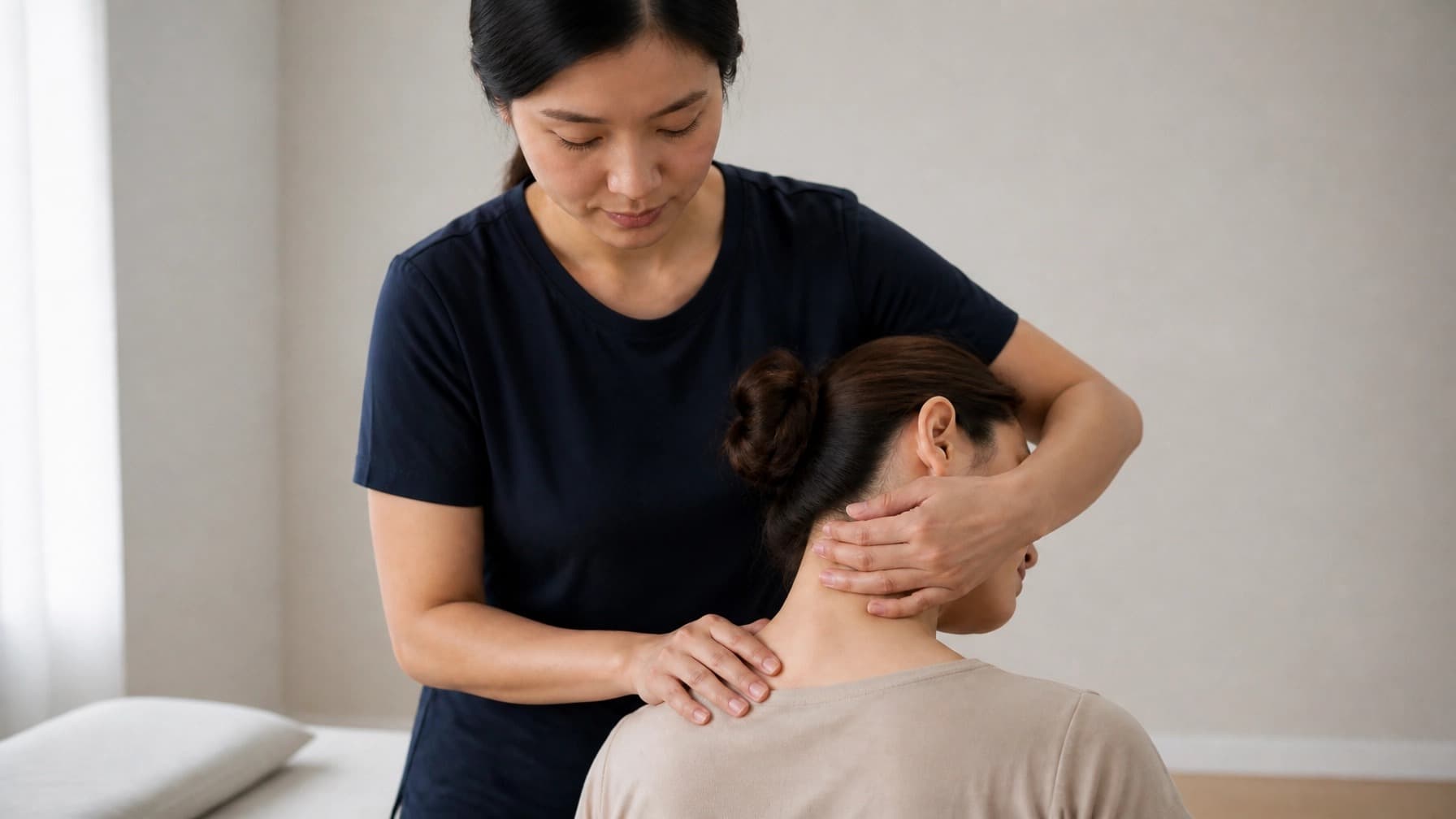
Many of us spend our days hunched over laptops or steering wheels. This "forward head" posture causes the muscles in the front of your neck (the scalenes) to tighten and the space in your thoracic outlet to shrink. We work with you to retrain your posture, aiming to open up that space and ease the load on your nerves.
2. Targeted Stretching and Mobility
We don't just give you random stretches. We target the specific "pinch points." This might include stretching the chest muscles (pectorals) or mobilising the first rib to give your nerves more room to breathe.

3. Nerve Gliding
Nerves don't like to be stretched, but they love to slide. We use specific "nerve gliding" exercises that gently move the nerve through the thoracic outlet, aiming to settle sensitivity and ease that tingling sensation.
4. Breathing the Right Way
Believe it or not, how you breathe matters! If you are a "chest breather," you use your neck muscles to lift your ribs every time you inhale. This can make those muscles tight and angry. We teach you diaphragmatic breathing to give those neck muscles a much-needed break.
We Come to You
One of the biggest hurdles in recovering from TOS is that your daily environment is often what's causing the problem. If you spend 8 hours a day at a desk that isn't set up correctly, an hour of physio once a week can only do so much.
That's why Komplete Physiotherapy offers a Mobile Physiotherapy service.
We can visit you at your home or workplace to see your setup in action. We don't just guess what your desk looks like; we see it. We can help you:
- Adjust your monitor height so you aren't straining your neck.
- Check your chair support to prevent "slumping."
- Identify repetitive movements in your daily routine that might be triggering your TOS.
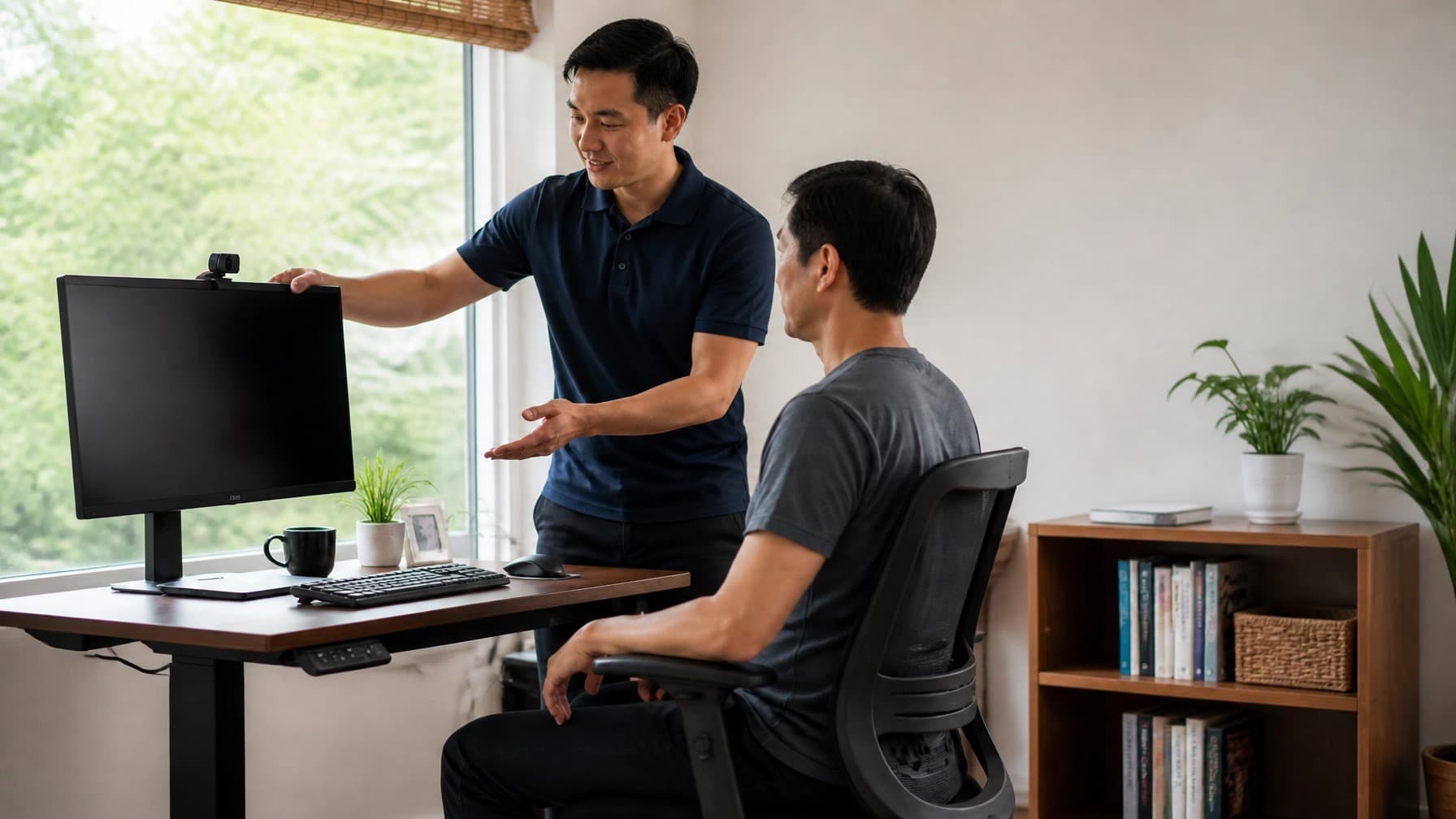
This "real-world" assessment is often the missing piece of the puzzle, and many people find it makes a difference to their recovery.
When is Surgery Necessary?
Physiotherapy helps many people, and we are also healthcare professionals who know when a different path is needed. Surgery is usually reserved for situations such as:
- Vascular TOS: where a blood vessel is completely blocked or has a clot (this is a medical emergency).
- Severe Nerve Damage: where muscles in the hand are visibly wasting away.
- Limited response to non-surgical care: if a well-structured program hasn't brought improvement over a period of months.
However, for many people, a consistent physiotherapy program over a number of weeks can make a real difference to how their recovery progresses.
Ready to Take the Pressure Off?
You don't have to live with a heavy arm or "mystery" tingling. Whether you're a busy office worker, a tradie on a CTP claim, or an older adult wanting to stay active, we're here to help.
At Komplete Physiotherapy, we pride ourselves on simple, practical care that fits into your life, literally!
Want us to help you find the root cause of your symptoms?
Give us a call or get in touch today. Let's work on clearing that "highway" so you can get back to moving well.