
19 August 2026
Orthopaedic Rehabilitation: From Injury or Surgery Back to Everyday Life
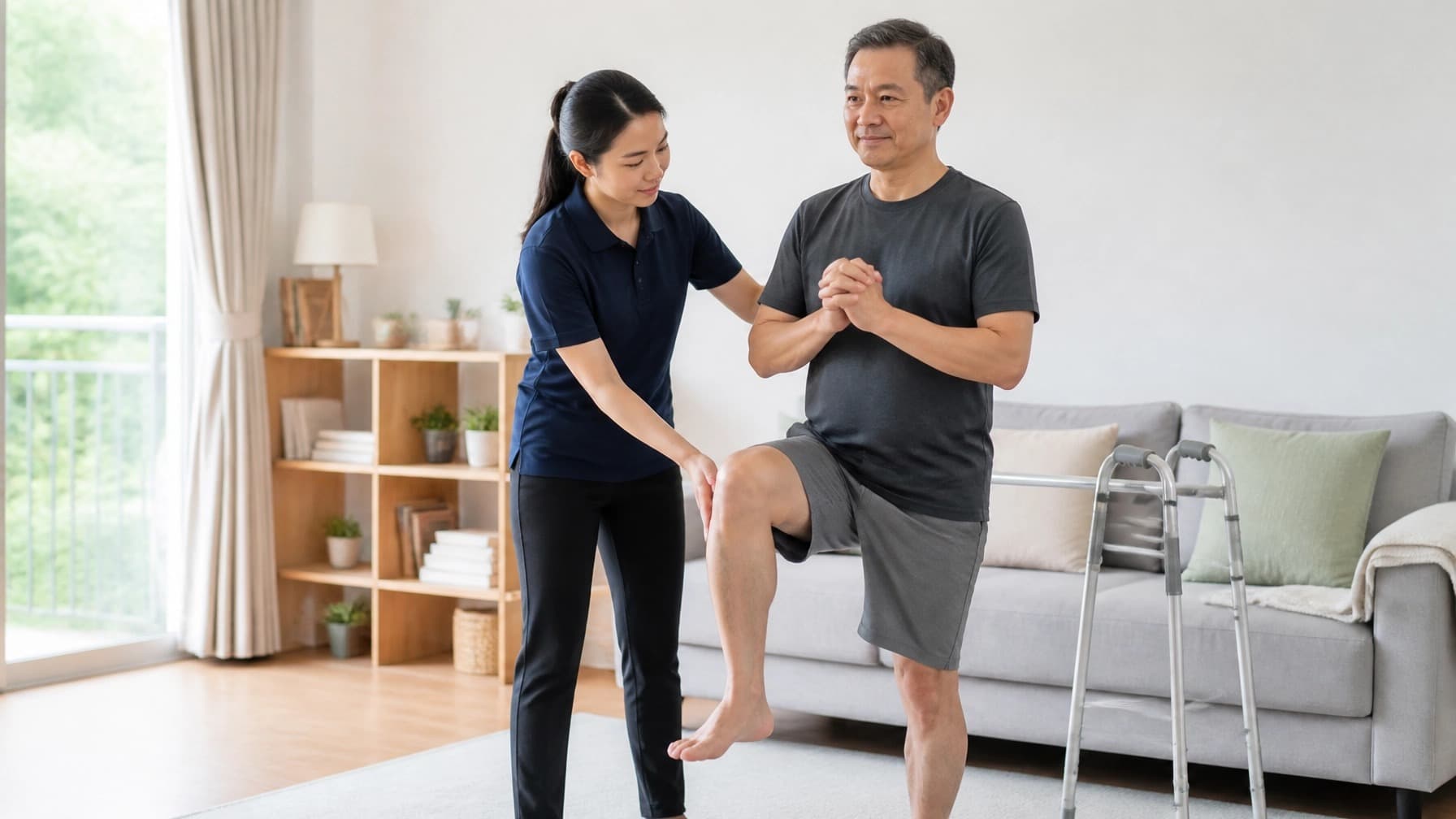
Recovering from an orthopaedic injury or surgery can feel like a long road. You may be dealing with pain, swelling, stiffness, reduced strength, or uncertainty about what you should and should not do.
The good news is that the right rehabilitation plan can help you move safely, rebuild confidence, and return to the activities that matter to you.
At Komplete Physiotherapy, we help people recovering from injuries, orthopaedic procedures, and changes in mobility rebuild their movement and confidence. This may take place in clinic or through mobile physio and home visit physiotherapy, depending on what suits your circumstances.
What is orthopaedic rehabilitation?
Orthopaedic rehabilitation is a structured programme designed to help your bones, joints, muscles, tendons, and ligaments recover after an injury or operation.
It may include:
- Managing pain and swelling
- Restoring joint movement
- Improving muscle strength and endurance
- Retraining balance and coordination
- Practising walking and transfers
- Building confidence with everyday activities
- Supporting a safe return to work, hobbies, sport, or independence
Rehabilitation is not simply about doing exercises. Your physiotherapist will also consider how you move, what tasks you need to perform, your home environment, your work demands, and any precautions provided by your surgeon or medical team.
Why might someone need orthopaedic rehabilitation?
People may benefit from physiotherapy after an injury or operation for many different reasons, including:
Fractures
After a broken bone, you may need rehabilitation once the injury has been placed in a cast, brace, or boot, or after surgical fixation.
During the early stages, treatment may focus on protecting the fracture, controlling swelling, and maintaining movement in the nearby joints. As healing progresses and weight-bearing is approved, rehabilitation can help restore strength, balance, walking, and confidence.
Your weight-bearing instructions are particularly important. Do not increase how much weight you place through an injured limb unless your doctor or physiotherapist has advised you to do so.
Joint replacements
Hip, knee, and shoulder replacements can improve pain and function, but recovery still requires time and patience.
Physiotherapy after joint replacement may help you:
- Get in and out of bed or a chair safely
- Walk with the correct aid
- Improve joint movement
- Strengthen the muscles around the joint
- Practise stairs
- Improve balance
- Return to personal care and household tasks
Some swelling, bruising, tiredness, and stiffness can be normal after surgery. However, your rehabilitation plan should always follow the instructions provided by your surgeon and hospital team.
Ligament injuries and reconstructions
Ligament injuries can happen during sport, work, or everyday activities. Examples include ankle ligament sprains and knee ligament injuries such as an ACL tear.
Rehabilitation may begin with protecting the injured area and reducing pain and swelling. It can then progress to movement, strengthening, balance, coordination, and task-specific training.
After ligament reconstruction, the programme must follow the surgical protocol carefully. Some movements, positions, or levels of weight-bearing may be restricted while the repaired tissue heals.
Orthopaedic surgery
Orthopaedic rehabilitation may also be recommended after procedures involving the spine, ankle, foot, hand, shoulder, or other joints.
The goals and timeline will depend on:
- The type of procedure
- The tissues involved
- Your age and general health
- Your mobility before surgery
- Your work, family, and lifestyle needs
- Your surgeon's restrictions and recommendations
There is no single recovery plan that suits everyone.
The main stages of orthopaedic rehabilitation
Recovery is usually gradual. You may move between stages at different speeds, and some stages may overlap.
1. Protecting the injury and settling symptoms
In the early stage, the priority is to protect healing tissues while managing pain and swelling.
Your physiotherapist may guide you through:
- Safe positioning
- Gentle movement within approved limits
- Circulation exercises
- Muscle-setting or isometric exercises
- Walking with crutches, a frame, or another aid
- Safe ways to move in bed or transfer to a chair
Rest is important, but complete inactivity for too long can lead to stiffness, weakness, and loss of confidence. The aim is usually relative rest combined with safe, prescribed movement.
2. Restoring movement
Once your symptoms are settling and healing allows, treatment can focus more on restoring range of motion.
This may include gentle active or assisted movements, stretching, and exercises that help you use the joint more comfortably. Your physiotherapist will monitor your response and adjust the amount of movement if needed.
It is normal for progress to be uneven. A good day does not always mean you should double your activity, and a slower day does not mean you are going backwards.
3. Rebuilding strength
Injury, surgery, pain, and periods of reduced activity can all cause muscle weakness. Strengthening exercises help your body support the affected joint and manage everyday loads.
Exercises may start with simple movements using your body weight or light resistance. Over time, they may progress to:
- Sit-to-stand exercises
- Step-ups
- Squats or supported mini-squats
- Resistance-band exercises
- Lifting and carrying tasks
- Exercises for the hips, knees, ankles, shoulders, or core
Good technique matters. Performing fewer repetitions with control is often more useful than rushing through a larger number.
4. Improving balance and coordination
Balance work is especially important after lower-limb injuries, joint replacements, fractures, and periods of reduced mobility.
Rehabilitation may include practising:
- Standing safely
- Weight shifting
- Turning
- Stepping over small obstacles
- Reaching while standing
- Single-leg balance, when appropriate
- Walking on different surfaces
Your physiotherapist will choose exercises that challenge you without creating unnecessary risk.
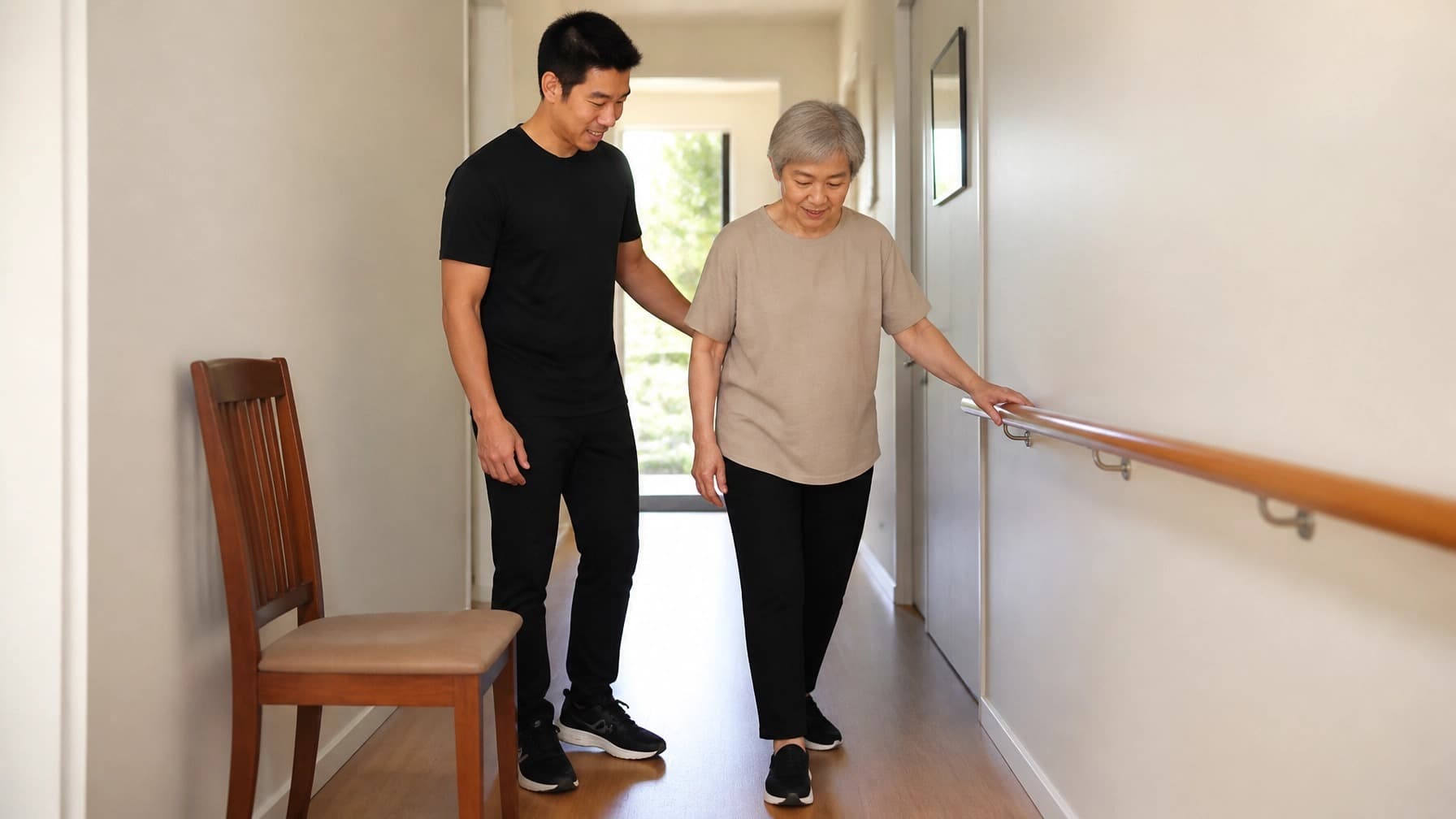
5. Returning to everyday activities
The final goal is not always a particular exercise. It may be getting dressed independently, preparing a meal, returning to work, caring for family, walking around the shops, or enjoying a favourite activity again.
This is where functional training becomes important. Your physiotherapist may practise the specific tasks you want to regain, such as:
- Getting in and out of the car
- Using stairs
- Walking to the letterbox
- Standing at the kitchen bench
- Lifting safely at work
- Getting up and down from the floor
- Returning to gardening, swimming, or other hobbies
Why rehabilitation should be gradual and individualised
It can be tempting to push hard when you are eager to recover. However, doing too much too soon can increase pain and swelling or place stress on healing tissues.
A gradual plan allows your body to adapt. Your physiotherapist may change the number of repetitions, the resistance, the walking distance, or the complexity of an exercise as your strength and tolerance improve.
As a general guide, mild discomfort may be acceptable if it settles reasonably quickly. Pain that continues to build, significantly affects your movement, or remains worse later that day or the next day may mean the activity needs to be reduced.
Always follow your individual instructions, particularly after surgery. Recovery timelines for the same procedure can vary between people.
How physiotherapy supports your recovery
Your physiotherapist will assess your movement, strength, balance, pain, swelling, and function. They can then create a programme suited to your current ability and goals.
During follow-up appointments, they may:
- Check how your injury or surgical area is responding
- Progress or modify exercises
- Review walking aids
- Assess your movement technique
- Help manage stiffness and discomfort
- Practise functional tasks
- Communicate with your medical team when appropriate
- Help you understand what is safe to do next
A home exercise programme is often an important part of recovery. Your physiotherapist can make sure you understand each exercise and know how to adjust your activity if symptoms change.
How mobile physio can help at home
Travelling to a clinic is not always easy after an operation or injury. Pain, limited mobility, transport difficulties, stairs, or caring responsibilities can all make appointments more challenging.
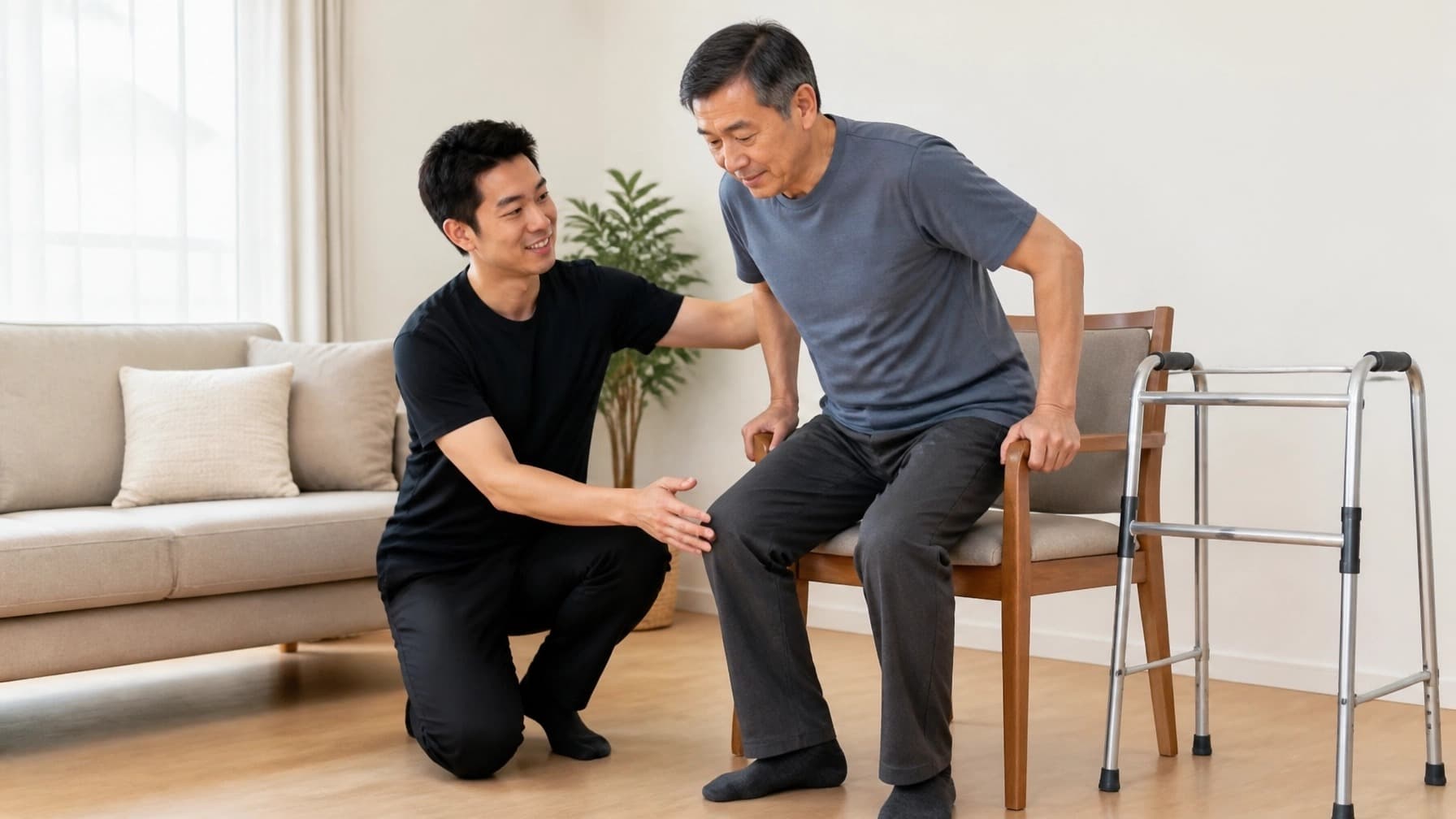
With mobile physio, treatment can take place in your own home. Home visit physiotherapy also allows your physiotherapist to see how you manage in your real environment.
Together, you may assess:
- Trip hazards and narrow walkways
- Stairs and bathroom access
- Chair and bed height
- How you use a walking frame or other aid
- Getting in and out of the shower
- Moving around the kitchen
- Getting in and out of your car
- The tasks your family or support workers assist with
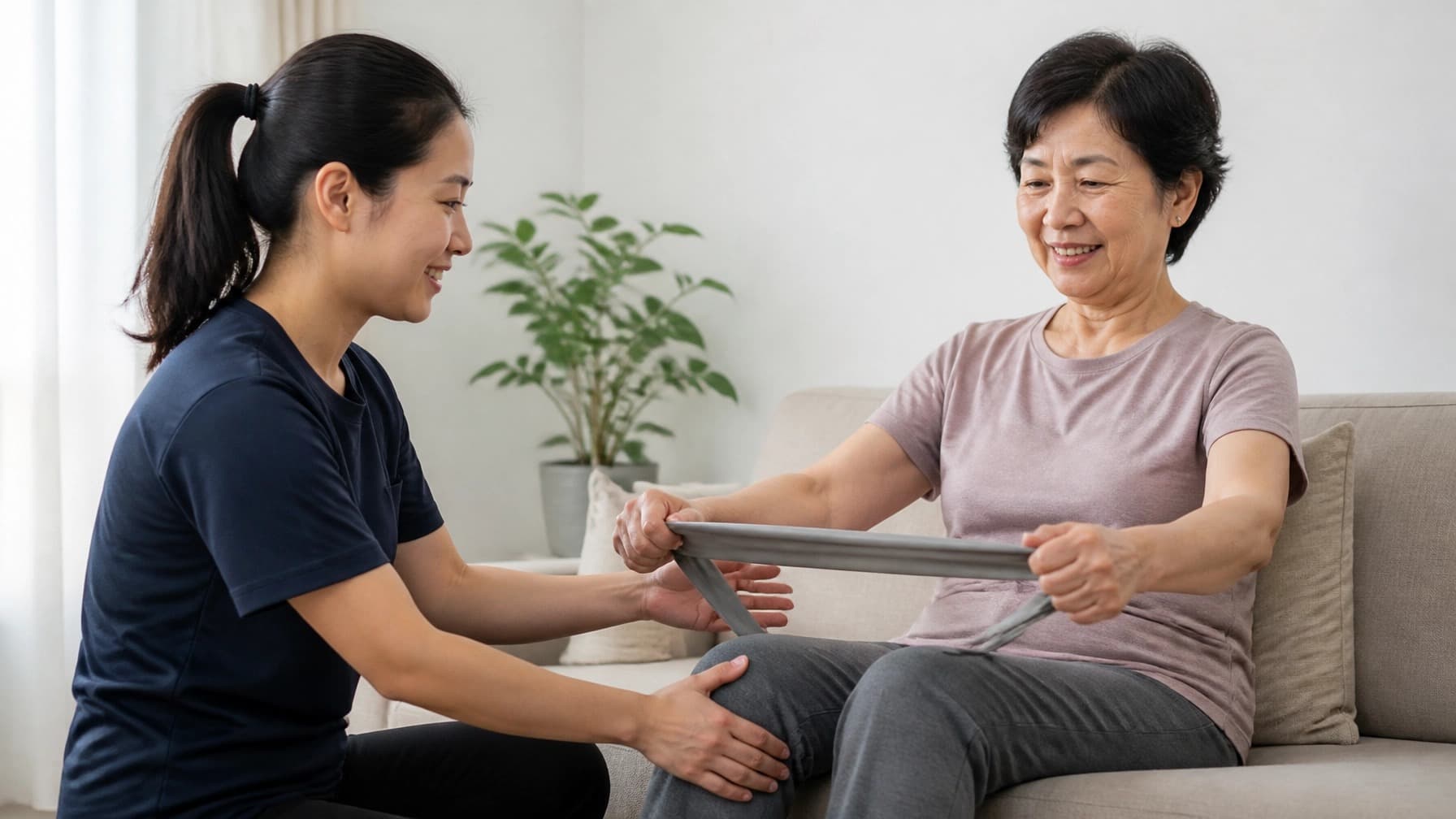
Practising real-life tasks can make rehabilitation more meaningful. It can also help identify simple changes that improve safety and independence while you recover.
Warning signs that need medical review
Contact your doctor, surgeon, or physiotherapist promptly if you notice:
- Pain or swelling that is steadily worsening
- A sudden sharp pain, loss of function, or feeling that the joint is giving way
- New or worsening redness, heat, or discharge around a surgical wound
- Fever, chills, or feeling unusually unwell
- New numbness, tingling, or weakness
- New one-sided calf or thigh pain, warmth, redness, or swelling, which should be reviewed by a doctor the same day
Seek emergency help by calling 000 if you experience sudden shortness of breath, chest pain, coughing up blood, fainting, or severe difficulty breathing. These symptoms can indicate a serious complication such as a blood clot in the lungs. You can also find general information about blood clots on the Healthdirect website at healthdirect.gov.au.
Take recovery one step at a time
Orthopaedic rehabilitation is a process. Some days will feel easier than others, and progress may not always be obvious straight away.
The right support can help you understand what your body needs, exercise safely, and gradually return to the activities that are important to you. Whether you need in-clinic care or the convenience of mobile physio, Komplete Physiotherapy can support your recovery with a practical, personalised approach.
If you have recently had surgery, sustained an injury, or are finding everyday movement difficult, speak with your doctor or contact Komplete Physiotherapy to discuss whether physiotherapy in clinic or at home may be suitable for you. Consultation types, durations, and total fees, including home visits, are listed on our Funding and Fees page.
This article provides general information and is not a substitute for individual medical advice. Always follow the instructions from your surgeon, doctor, and physiotherapist.