
28 August 2026
Why Your Back Hurts After Sitting All Day
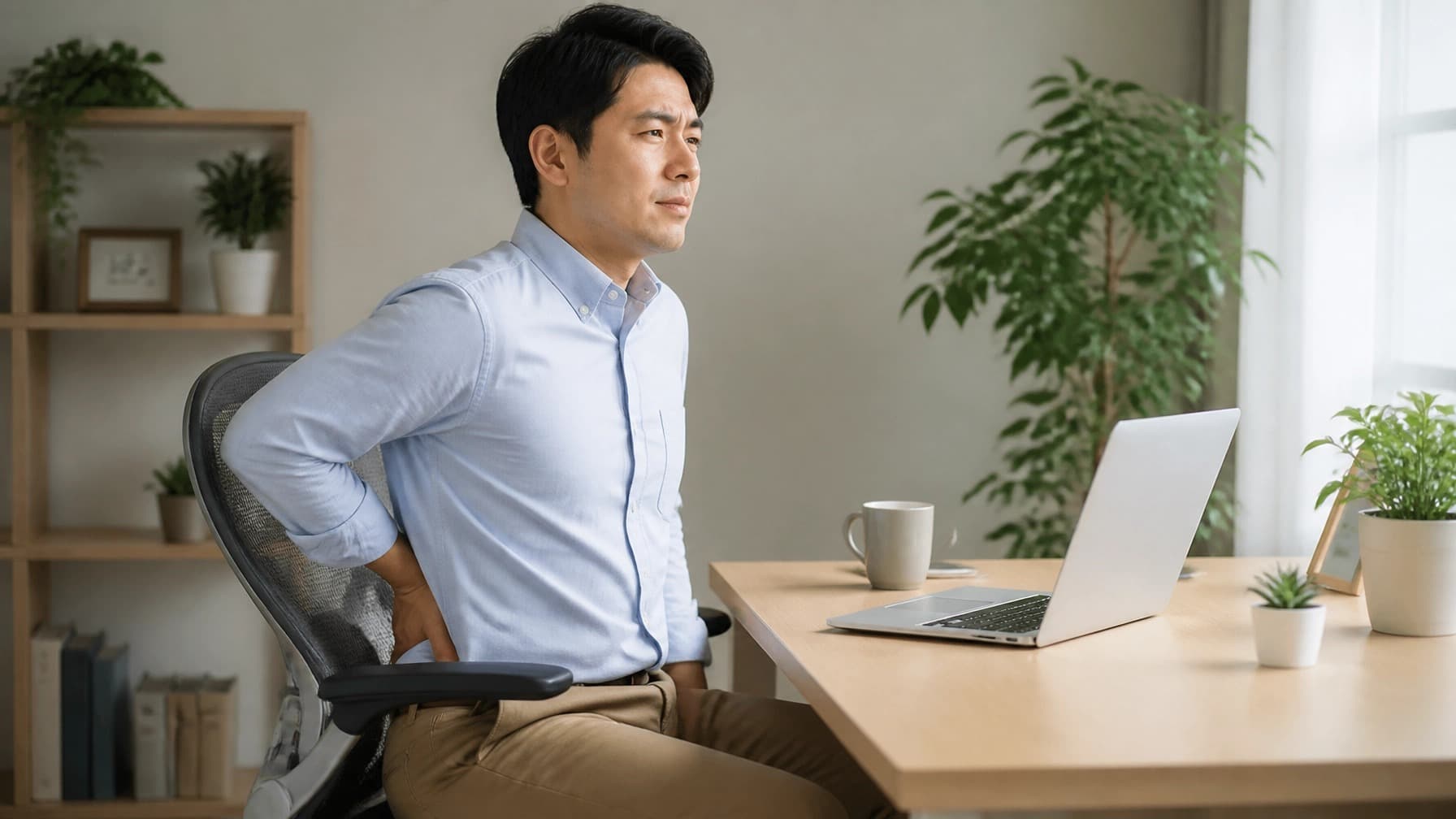
If your lower back feels stiff, achy or uncomfortable after a long day at your desk, you are certainly not alone. Many people notice back pain after working, studying, driving or relaxing in one position for several hours.
But is sitting itself the problem?
Not always. Sitting is a normal part of daily life, and there is no single "perfect" posture that prevents all back pain. More often, discomfort develops when your body spends too long in one position without enough movement, variety or opportunities to build strength and tolerance.
The good news is that small, consistent changes can make sitting more comfortable. If your pain continues or affects your daily activities, physiotherapy may also help you understand what is contributing to your symptoms and create an individual plan.
Why does sitting for a long time cause lower back pain?
1. Your back is holding one position for too long
Your body is designed to move through many different positions. When you sit for hours, your spine, hips and surrounding muscles remain in a relatively fixed position.
Even a comfortable posture can become uncomfortable if you hold it for too long. Muscles may become tired, joints can feel stiff and your back may become more sensitive to normal loads.
This is one reason you might feel fine when you first sit down, but notice an ache or stiffness when you stand up later.
2. Sitting reduces movement variety
The issue is often less about one "bad" posture and more about a lack of movement variety.
For example, you might spend most of the day:
- Sitting at a desk
- Leaning towards a screen
- Driving between appointments
- Sitting on the couch in the evening
- Looking down at a phone
Each position may feel manageable for a short time. However, repeating the same position for hours can place continuous demand on the same tissues.
Changing position regularly gives different muscles and joints a chance to share the workload.
3. Your hips and back may feel stiff
When you sit, your hips remain bent for an extended period. This can make the front of the hips feel tight, particularly if you do not walk or move much during the day.
Your lower back may also feel stiff after prolonged sitting, especially when you stand, bend or begin walking. This does not necessarily mean anything has been damaged. Stiffness is often a sign that your body is asking for more regular movement and a gradual return to activity.
4. Your back may be sensitive to sustained loading
Sitting places a normal load on your spine. Slouching or leaning forward can change how that load is distributed, but sitting upright does not remove all pressure either.
The important point is that the spine is generally strong and capable of handling everyday activities. Problems can arise when a position is held for longer than your current tolerance allows, particularly if you are also dealing with stress, poor sleep, a recent injury or a sudden increase in workload.
If sitting consistently aggravates pain down your leg, causes pins and needles or makes symptoms progressively worse, an assessment is recommended.
5. Stress, sleep and workload can influence pain
Back pain is not only about muscles, joints and posture. Your overall health and daily circumstances can affect how strongly you experience pain.
Stress, poor sleep, long working hours, low mood and limited physical activity can all make your body more sensitive. These factors may increase muscle tension, reduce recovery and make normal movements feel more uncomfortable.
This does not mean your pain is "just stress". Your pain is real. It means that a complete approach to back pain considers your work demands, sleep, activity levels and general wellbeing, not just the position of your chair.
Is there a perfect sitting posture?
No. There is no single posture that is perfect for everyone, and trying to sit rigidly upright all day can create its own tension and fatigue.
Instead, aim for a workstation that feels comfortable and allows you to change position easily.
You may find it helpful to:
- Keep your feet supported on the floor or on a footrest
- Adjust your chair so your hips and knees feel comfortable
- Keep your screen at a height that does not require constant neck bending
- Place your keyboard and mouse close enough to avoid reaching
- Use a small cushion or rolled towel behind your lower back if it feels comfortable
- Relax your shoulders and avoid gripping or bracing unnecessarily
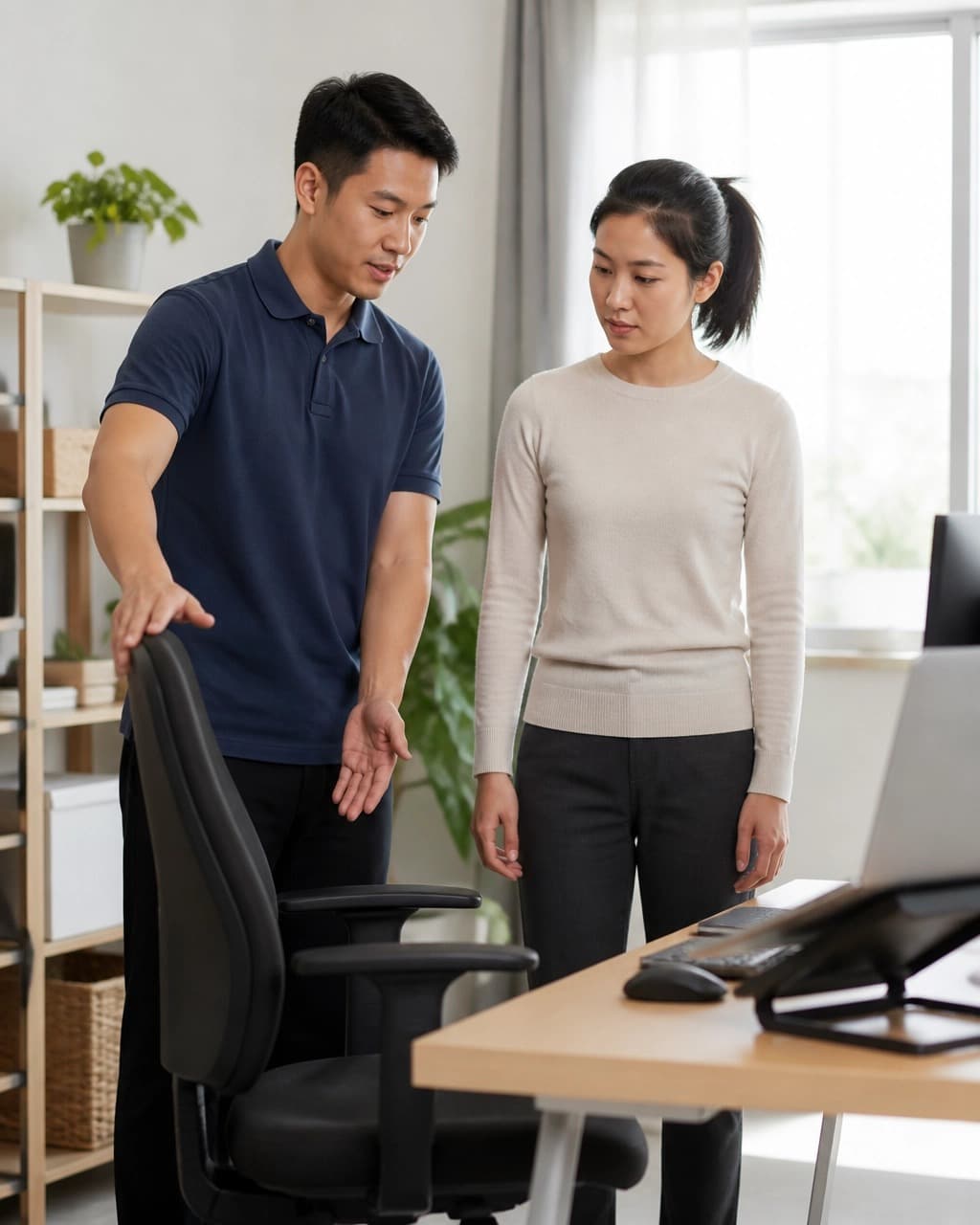
These are starting points, not strict rules. A position that feels comfortable for you may not be comfortable for someone else.
The most useful posture is often your next posture. Regularly moving between reasonable positions is generally more practical than trying to maintain one ideal position all day.
What can you do to reduce back pain after sitting?
Take short movement breaks
Try to avoid waiting until your back is already sore before moving. Research on prolonged sitting generally supports breaking up long periods with brief movement, and a break every 30 minutes or so can be a helpful starting point.
You could:
- Stand up and walk around the room
- Get a glass of water
- March gently on the spot
- Perform a few comfortable standing movements
- Walk to speak to a colleague instead of sending a message
- Use the stairs when appropriate
Even one or two minutes can break up a long period of sitting.

Alternate sitting and standing where possible
If your workplace allows it, alternate between sitting and standing during the day. A sit-stand desk can be useful, but it is not essential. You can also stand for short tasks such as making a phone call or reading a document.
Standing all day is not necessarily better than sitting all day. The goal is to regularly change position and avoid spending most of your day in one posture.
Add walking to your routine
Walking is a simple way to introduce movement without needing special equipment. Consider taking several short walks throughout the day rather than relying on one long walk.
You might walk before work, during a lunch break, after dinner or between appointments. Start with an amount that feels manageable and build gradually.
If walking increases your pain significantly or causes symptoms to travel further down your leg, seek professional advice.
Build strength gradually
Your back, hips and abdominal muscles need to tolerate the activities you ask them to perform. Gradual strengthening can help improve capacity over time.
Exercises may include:
- Bridges
- Sit-to-stand movements
- Gentle abdominal control exercises
- Hip strengthening
- Bodyweight squats
- Walking or other low-impact activities
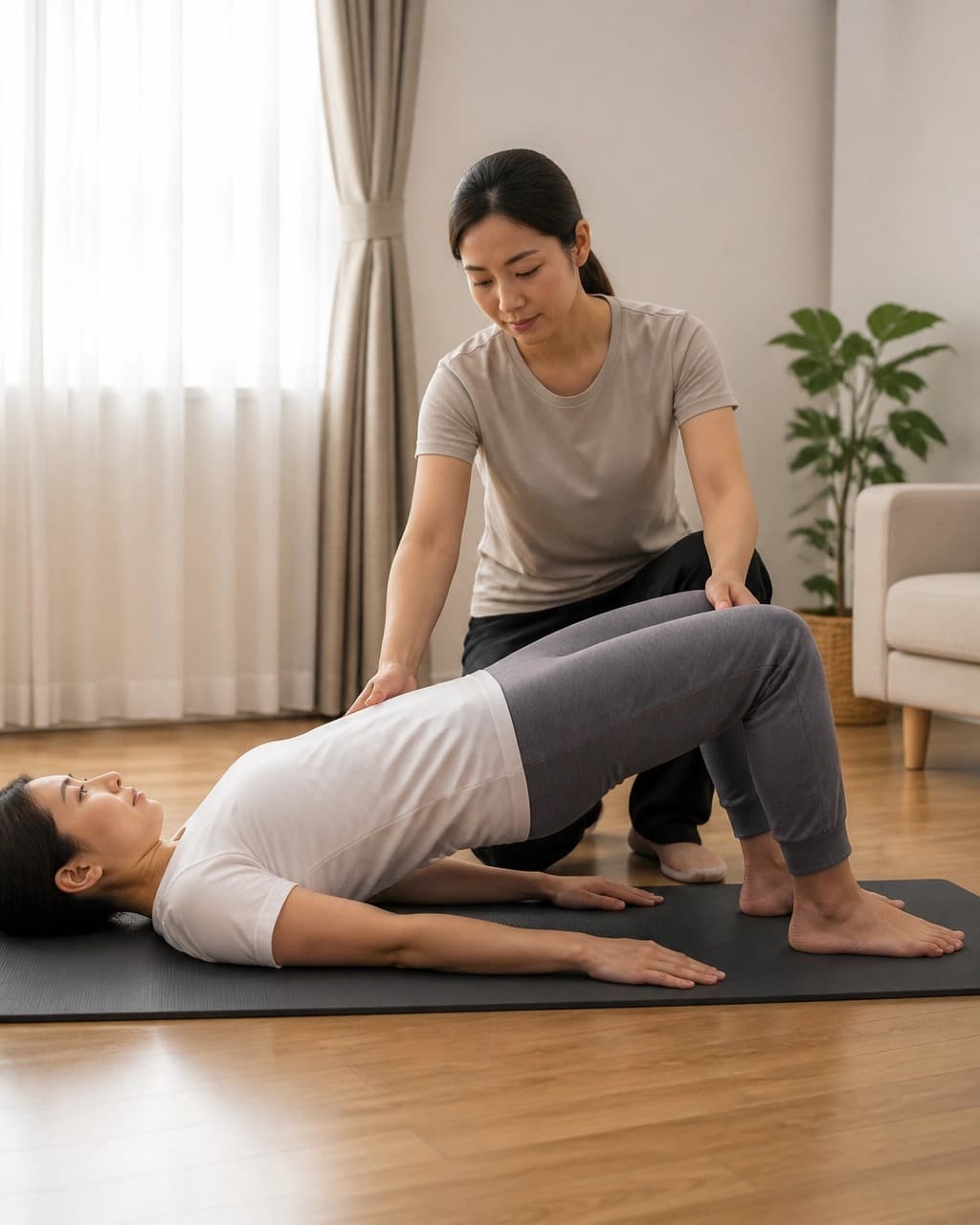
However, one exercise will not work for everyone. The right choice depends on your symptoms, current strength, health history and goals. Exercises should usually be introduced gradually rather than pushed through severe pain.
When can physiotherapy help?
Physiotherapy may be useful if your back pain is persistent, keeps returning or is making it difficult to work, sleep, exercise or complete everyday activities.
At Komplete Physiotherapy, an assessment may consider:
- How your symptoms started
- What positions and activities aggravate or ease your pain
- Your movement, strength and mobility
- Your work or home setup
- How much sitting, walking and exercise you currently tolerate
- Your goals and daily responsibilities
Your plan may include movement advice, workstation adjustments, hands-on treatment where appropriate, and a tailored strengthening or mobility program.
Komplete Physiotherapy provides home visits for people who may benefit from care in their usual environment.
During a home visit, a physiotherapist can look at your desk, chair, couch and daily routines in the place where you actually use them. For some people it is helpful to have their usual setup seen first hand rather than described from memory.

Depending on your individual arrangements and eligibility, home visits may be funded privately or under Workers Compensation, CTP, or the Aged Care Support at Home Program.
Home visit fees are listed in full, along with every other consultation type and its total price, on the Funding and Fees page at kompletephysio.com.au/funding-and-fees.
When should you seek urgent medical help?
Most lower back pain is not caused by a serious condition. However, seek urgent medical assessment the same day, or call 000 if symptoms are severe or rapidly worsening, if you develop:
- New changes to bladder or bowel control
- Difficulty starting urination or emptying your bladder
- Numbness around the groin, inner thighs or "saddle" area
- Progressive weakness in one or both legs
- Severe back pain after significant trauma, such as a serious fall or car accident
You should also arrange a medical or physiotherapy review if your pain is persistent, worsening, unusual, regularly wakes you at night, or is accompanied by significant leg pain, numbness or tingling.
The main takeaway
Sitting all day is not automatically harmful, and posture is not the only explanation for lower back pain. The bigger issue is often spending too long in one position with too little movement, while other factors such as stress, sleep, workload and general activity may also contribute.
Start with small changes:
- Change position regularly.
- Take short walking or movement breaks.
- Adjust your workstation for comfort.
- Alternate sitting and standing where possible.
- Build walking and strengthening gradually.
- Seek an individual assessment if your symptoms persist or worsen.
You do not need to find one perfect posture. Aim to make movement a regular part of your day and build your body's tolerance over time.
If your back pain is persistent or getting in the way of work, sleep or exercise, give us a call or get in touch to talk it through.
Further reading
These are independent organisations and Komplete Physiotherapy is not affiliated with them:
- Back Pain When Sitting, Hospital for Special Surgery (hss.edu)
- Don't Take Back Pain Sitting Down, Harvard Health (health.harvard.edu)
- Lower Back Pain, Cleveland Clinic (my.clevelandclinic.org)
- Ergonomics and Prolonged Sitting, UCLA Health (uclahealth.org)
This article is general information and does not replace an individual assessment by a qualified health professional.